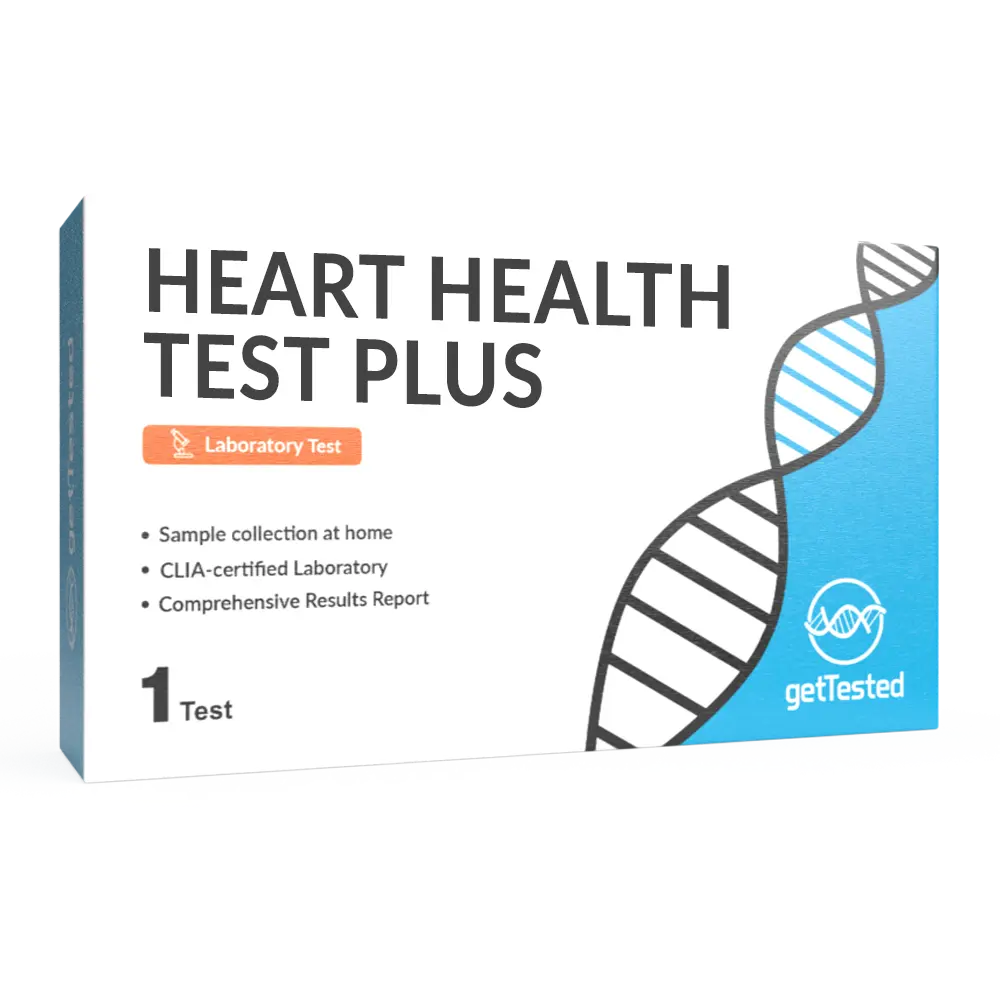
Heart Health Test Plus – Cardio-Metabolic Panel
Assess your heart health with GetTested's at-home Cardio-Metabolic Panel Plus. Measures hs-CRP, Lp(a), ApoB/ApoA1, Insulin, HbA1c, and more via DBS.
Product details: USD 159 — InStock — SKU GT_017 — GetTested
About this test
Key Benefits
Gain a profound understanding of your cardiovascular and metabolic health with the GetTested Heart Health Test Plus. This advanced at-home test provides insights beyond standard lipid panels, covering critical markers for inflammation, insulin function, and advanced cholesterol metrics.
Comprehensive Risk Assessment: Evaluate your individual risk profile for cardiovascular conditions and metabolic dysfunction.
Advanced Lipid Analysis: Move beyond basic cholesterol numbers with ApoA1, ApoB, Lp(a), and relevant ratios for a clearer picture.
Inflammation and Metabolic Insights: Measure hs-CRP for systemic inflammation, and Insulin and HbA1c for glucose regulation and diabetes risk.
Convenient At-Home Collection: Utilize a simple and discreet dried blood spot (DBS) sample collection from the comfort of your home.
Proactive Health Management: Empower yourself with detailed data to guide lifestyle choices and discussions with your healthcare provider.
What This Test Measures
The Heart Health Test Plus analyzes 14 crucial biomarkers, offering a holistic view of your cardio-metabolic status.
Cardiovascular Markers
hs-CRP (high-sensitivity C-Reactive Protein): An indicator of systemic inflammation, which is implicated in cardiovascular disease development.
Total Cholesterol (CHOL): Overall cholesterol level.
HDL-C (High-Density Lipoprotein Cholesterol): Often referred to as "good" cholesterol, involved in cholesterol transport from arteries.
LDL-C (Low-Density Lipoprotein Cholesterol): Often referred to as "bad" cholesterol.
Triglycerides: A type of fat in the blood; high levels can increase heart disease risk.
ApoA1 (Apolipoprotein A1): A major protein component of HDL, reflecting its concentration.
ApoB (Apolipoprotein B): A primary protein of "bad" cholesterol particles like LDL, often considered a better risk predictor than LDL-C alone.
CHOL/HDL Ratio: A classic cardiovascular risk ratio.
LDL/HDL Ratio: Another key ratio for assessing cardiovascular risk.
ApoB/ApoA1 Ratio: A powerful predictor of cardiovascular disease risk, often more accurate than traditional lipid ratios.
Lp(a) (Lipoprotein(a)): A genetic risk factor for premature atherosclerotic cardiovascular disease and aortic valve stenosis.
Homocysteine: An amino acid; elevated levels are associated with an increased risk of heart disease and stroke.
Metabolic Markers
Insulin: A hormone central to glucose metabolism; elevated levels can indicate insulin resistance.
HbA1c (Hemoglobin A1c): Provides an average blood sugar level over the past 2–3 months, used to diagnose and monitor diabetes.
How It Works
The GetTested Heart Health Test Plus offers a simple and confidential process to gain vital health insights.
Order Your Kit: Purchase your Heart Health Test Plus online. A discreet kit will be delivered to your address.
Collect Your Sample: Follow the clear instructions to collect a dried blood spot (DBS) sample using a simple finger-prick method.
Mail to Lab: Send your collected sample to our CLIA-certified laboratory using the pre-paid return envelope.
Receive Digital Results: Securely access your comprehensive results and personalized insights online within 2–5 business days of the lab receiving your sample. Your report will include detailed explanations for each biomarker.
Why Choose At-Home DBS Testing?
Dried Blood Spot (DBS) testing provides a convenient and effective alternative to traditional venous blood draws, particularly for a wide range of cardio-metabolic markers.
It allows for easy at-home sample collection, reducing the need for clinic visits and offering flexibility for busy schedules. DBS technology ensures sample stability and reliable results for the biomarkers included in this panel.
Biomarkers included
- ApoB/ApoA1 Ratio: The ApoB/ApoA1 ratio compares apolipoprotein B (ApoB) to apolipoprotein A1 (ApoA1). It provides an estimate of the balance between atherogenic lipoprotein particles (ApoB-containing) and protective HDL-related particles (ApoA1-containing). A higher ratio indicates a greater proportion of atherogenic particles relative to protective ones and is associated with higher cardiovascular risk. In many st
- HDL Cholesterol: HDL cholesterol, often referred to as "good" cholesterol, is a type of lipoprotein that carries cholesterol from other parts of your body back to your liver, where it is broken down and removed from the body. Higher levels of HDL are generally associated with a lower risk of heart disease and stroke, as it helps prevent the buildup of cholesterol in the arteries. Measuring HDL levels is important
- Insulin: Insulin is a hormone produced by the pancreas that plays a crucial role in regulating blood glucose (sugar) levels. It facilitates the uptake of glucose from the bloodstream into cells for energy or storage. Abnormal insulin levels, either too high or too low, are key indicators of metabolic disorders such as diabetes and insulin resistance.
- CHOL/HDL Ratio: The CHOL/HDL ratio is calculated by dividing total cholesterol (CHOL) by high-density lipoprotein (HDL) cholesterol. It helps describe the balance between cholesterol carried in potentially atherogenic lipoproteins and the protective HDL fraction. A higher ratio generally reflects a less favorable lipid profile and is associated with increased cardiovascular risk, while a lower ratio is typically
- Lp(a): Lipoprotein(a), or Lp(a), is a type of low-density lipoprotein (LDL) particle that contains an additional protein called apolipoprotein(a). Elevated levels of Lp(a) are a significant, inherited, and independent risk factor for atherosclerotic cardiovascular disease (ASCVD), including heart attacks and strokes, even in individuals with otherwise optimal cholesterol levels. It's important because it
- LDL/HDL Ratio: The LDL/HDL ratio is a calculation derived from your cholesterol levels, specifically the ratio of 'bad' low-density lipoprotein (LDL) cholesterol to 'good' high-density lipoprotein (HDL) cholesterol. This ratio is important because it provides a more comprehensive assessment of cardiovascular risk than looking at individual cholesterol levels alone, indicating the balance between cholesterol that
- hs-CRP (high-sensitivity C-reactive protein): High-sensitivity C-reactive protein (hs-CRP) is a specific type of C-reactive protein test that can detect very low levels of inflammation in the body. While CRP is a general marker of inflammation, hs-CRP is particularly important for assessing the risk of cardiovascular disease, even in apparently healthy individuals. Elevated hs-CRP levels suggest chronic low-grade inflammation, which is a sign
- LDL Cholesterol: LDL cholesterol, often referred to as "bad" cholesterol, is a type of lipoprotein that carries cholesterol to your tissues and arteries. High levels of LDL can lead to the buildup of cholesterol in the arteries (atherosclerosis), increasing the risk of heart disease, heart attack, and stroke. Measuring LDL levels is a key component of assessing cardiovascular health and determining the need for li
- Triglycerides: Triglycerides are a type of fat (lipid) found in your blood. Your body uses triglycerides for energy, but high levels can increase your risk of heart disease and other health problems. They are primarily measured to assess cardiovascular health and metabolic risk.
- Total Cholesterol: Total cholesterol is a measure of the total amount of cholesterol in your blood, including LDL (bad), HDL (good), and other lipid components. While it provides a general overview of cholesterol levels, it's important to consider the individual levels of LDL and HDL for a more complete assessment of cardiovascular risk. High total cholesterol can increase the risk of heart disease and stroke.
- HbA1c (Hemoglobin A1c): HbA1c (Hemoglobin A1c) measures the average blood glucose levels over the past 2-3 months by assessing the percentage of hemoglobin in red blood cells that is coated with sugar. It's a crucial indicator for diagnosing and monitoring diabetes, as persistently high levels denote poor long-term glucose control, increasing the risk of diabetes-related complications. This test provides a more stable an
- Homocysteine: Homocysteine is an amino acid produced during the metabolism of methionine, an essential amino acid found in protein. Elevated levels of homocysteine are considered a risk factor for cardiovascular disease (e.g., heart attack, stroke) and may also be associated with cognitive impairment and certain neurological conditions. Its importance lies in its role as an indicator of nutritional deficiencies
- ApoA1: ApoA1 is the main protein component of high-density lipoprotein (HDL), often called “good” cholesterol. It supports reverse cholesterol transport by helping move excess cholesterol from tissues and blood vessel walls back to the liver for processing and excretion. ApoA1 is therefore considered a marker of HDL particle content and function, and higher levels are generally associated with a more fav
- ApoB: Apolipoprotein B (ApoB) is the main structural protein found on atherogenic (“bad” cholesterol–carrying) lipoproteins, including LDL, VLDL, IDL, and lipoprotein(a) [Lp(a)]. Each of these particles typically contains one ApoB molecule, which makes ApoB a practical measure of the total number of atherogenic particles in the bloodstream. Elevated ApoB levels indicate a higher concentration of particl
How to prepare
Collect the sample in the morning after a 10–12 hour overnight fast (no food).
Frequently asked questions
What is the Heart Health Test Plus – Cardio-Metabolic Panel and what does it measure?

The Heart Health Test Plus is a comprehensive at-home cardio-metabolic assessment designed to provide deep insights into your cardiovascular and metabolic health. This advanced test utilizes a convenient dried blood spot (DBS) sample to measure key biomarkers beyond traditional cholesterol panels. It includes advanced lipids like ApoB/ApoA1 ratio and Lp(a), inflammatory markers such as hs-CRP, metabolic indicators like HbA1c and Insulin, and other critical health markers like Homocysteine, offering a holistic view of your heart health and metabolic function.
How does the at-home testing process work for the Cardio-Metabolic Panel?
The process is straightforward and convenient: you order the test online, and a collection kit is mailed directly to your home. You will collect a small dried blood spot sample using a simple finger prick lancet, following the detailed instructions provided. Once collected, you mail your sample back to our CLIA-certified laboratory using the pre-paid shipping provided. We emphasize validation for all specific panel markers via DBS, ensuring accuracy and reliability from a home setting.
Who should consider taking the Heart Health Test Plus?
This panel is ideal for individuals seeking a more comprehensive understanding of their heart and metabolic health beyond standard screenings. It’s particularly beneficial for those with a family history of cardiovascular disease, individuals monitoring metabolic conditions like pre-diabetes or insulin resistance, or anyone wanting actionable insights to optimize their well-being. This test is especially relevant for informed users seeking advanced insights into markers like ApoB/ApoA1 ratio and Lp(a), which are often overlooked in basic tests.
What specifically is included in the price of the Heart Health Test Plus?
The price includes the complete at-home dried blood spot collection kit, detailed instructions, pre-paid return shipping to our CLIA-certified laboratory, and the comprehensive laboratory analysis of all specified cardio-metabolic biomarkers. Your results will be securely delivered to your online portal, accompanied by clear interpretive guidance. We aim to provide a detailed 'What to do next' post-results guide with specific, general actionable steps and links to credible resources to empower your health journey, which competitors often miss.
How long does it take to receive results, and how reliable is this at-home test?
You can typically expect to receive your results within 2-7 business days after your sample arrives at our CLIA-certified laboratory. Our testing is conducted in highly accredited facilities, known for their rigorous quality control and precision. The dried blood spot method used for this panel has undergone extensive validation for all measured health markers, ensuring results are both accurate and reliable, comparable to traditional venous draws for these specific biomarkers.
How do I interpret my results, and what should I do after receiving them?
Your results will be presented in an easy-to-understand format through your secure online portal, with clear ranges and explanations for each biomarker. We provide interpretive notes to help you understand the significance of your Lp(a), ApoB/ApoA1 ratio, hs-CRP, Homocysteine, and metabolic markers. For personalized guidance and to discuss specific lifestyle recommendations, especially linked to researched interventions for markers like Homocysteine or ApoB/ApoA1, we strongly recommend sharing your comprehensive results with your healthcare provider for a thorough consultation.
Customer reviews
4.8/5 (5)
- 5/5 — Really like this mix of markers – covers everything I wanted to check.
- 5/5 — As someone with a family history of heart issues, I'm always looking for ways to stay proactive. This test covered a wide range of important markers, including Lp(a) and ApoB/ApoA1, which aren't typically part of routine blood work. The kit arrived quickly, and the instructions for the DBS sample were easy to follow. Receiving the detailed results digitally and being able to discuss them with my nutritionist for personalized recommendations was a huge bonus. It's a great tool for anyone serious about understanding their cardiovascular risk.
- 5/5 — I found this at-home test to be incredibly efficient. The sample collection took minimal effort, and I received my results within a few business days of the lab receiving my sample. The digital portal made it simple to view my numbers and read up on what each biomarker signified. This panel offered a deeper dive than I expected, providing a solid foundation for health discussions with my doctor.
- 4/5 — The Heart Health Panel Plus offered some valuable insights into my cardio-metabolic markers that my regular doctor hadn't explored. The fasting requirement was a bit of a nuisance, but necessary for accuracy. The finger-prick collection was straightforward, and the results turnaround was as promised. I shared them with my GP who found them useful for a more targeted discussion about prevention.
- 5/5 — I've been looking for a way to get a more in-depth look at my heart health beyond a standard physical, and this panel delivered! The at-home collection was surprisingly easy with clear instructions. I appreciated not having to take time off work for a lab visit. My results came back within a week, which was fantastic, and the digital explanation of each biomarker was very helpful.