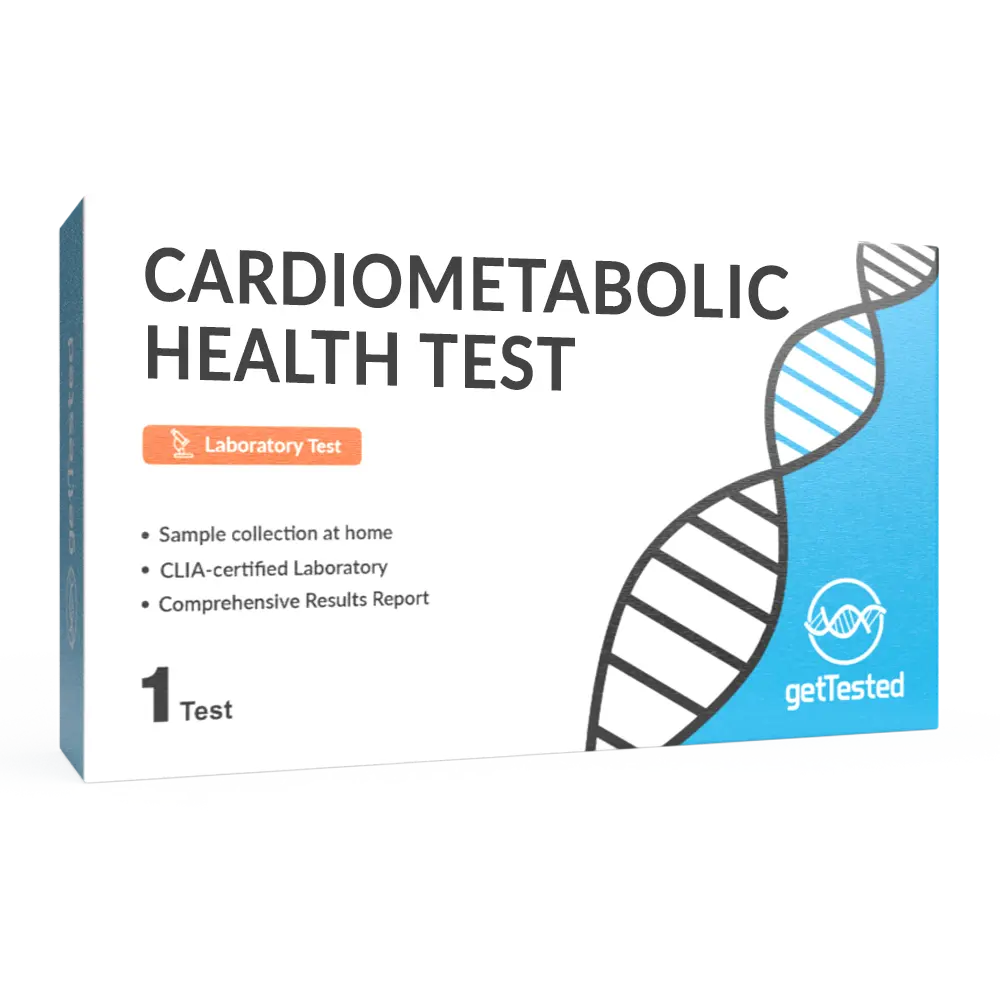
Cardiometabolic Health Test
GetTested’s Cardiometabolic Health Test measures key markers related to cholesterol, blood sugar, inflammation, and insulin resistance.
The panel includes total cholesterol, HDL cholesterol, calculated LDL cholesterol, triglycerides, ApoB, Lp(a), hs-CRP, glucose, HbA1c, insulin, and HOMA-IR, providing a broader view of cardiometabolic health than standard lipid or glucose testing alone.
Samples are collected at home using a finger-prick dried blood spot (DBS) and analysed in a CLIA-certified laboratory, with results delivered digitally.
$119.00
HSA & FSA eligible

About Cardiometabolic Health Test
What your cardiometabolic markers can indicate
This test helps assess key areas of cardiometabolic health, including cholesterol balance, blood sugar regulation, insulin response, and low-grade inflammation.
Cholesterol markers can provide insight into how fats are transported in the blood and whether lipid-related risk factors may be present. This includes total cholesterol, HDL cholesterol, calculated LDL cholesterol, triglycerides, ApoB, and Lp(a). Calculated LDL cholesterol is an estimated LDL value based on other lipid markers, rather than a directly measured result.
Glucose, HbA1c, insulin, and HOMA-IR help show how the body handles blood sugar and insulin response. hs-CRP adds context around inflammation, which can be relevant when looking at cardiovascular and metabolic health together.
What This Test Measures
Biomarkers
11 biomarkers
Sample
Blood
Results in
1-3 days after lab receipt
Format
Lab Test
How It Works
You collect a small blood sample at home using a finger-prick method. The sample is then sent to a CLIA-certified laboratory for analysis.
Your results are delivered digitally once testing is complete.
Sample Collection
The test uses a dried blood spot (DBS) sample collected from your fingertip.
A few drops of blood are placed on a collection card and sent to the laboratory for analysis.
Have Questions?
Chat with our AI assistant for instant answers about this product, usage, or recommendations.
Over 500,000 Customers
4.8 out of 5 based on 5 reviews on this product
$119.00
Cardiometabolic Health Test
GetTested’s Cardiometabolic Health Test measures key markers related to cholesterol, blood sugar, inflammation, and insulin resistance.
The panel includes total cholesterol, HDL cholesterol, calculated LDL cholesterol, triglycerides, ApoB, Lp(a), hs-CRP, glucose, HbA1c, insulin, and HOMA-IR, providing a broader view of cardiometabolic health than standard lipid or glucose testing alone.
Samples are collected at home using a finger-prick dried blood spot (DBS) and analysed in a CLIA-certified laboratory, with results delivered digitally.
$119.00
HSA & FSA eligibleWhat your cardiometabolic markers can indicate
This test helps assess key areas of cardiometabolic health, including cholesterol balance, blood sugar regulation, insulin response, and low-grade inflammation.
Cholesterol markers can provide insight into how fats are transported in the blood and whether lipid-related risk factors may be present. This includes total cholesterol, HDL cholesterol, calculated LDL cholesterol, triglycerides, ApoB, and Lp(a). Calculated LDL cholesterol is an estimated LDL value based on other lipid markers, rather than a directly measured result.
Glucose, HbA1c, insulin, and HOMA-IR help show how the body handles blood sugar and insulin response. hs-CRP adds context around inflammation, which can be relevant when looking at cardiovascular and metabolic health together.
What This Test Measures
Biomarkers
11 biomarkers
Sample
Blood
Results in
1-3 days after lab receipt
Format
Lab Test
How It Works
You collect a small blood sample at home using a finger-prick method. The sample is then sent to a CLIA-certified laboratory for analysis.
Your results are delivered digitally once testing is complete.
Sample Collection
The test uses a dried blood spot (DBS) sample collected from your fingertip.
A few drops of blood are placed on a collection card and sent to the laboratory for analysis.
Do I need to fast before taking this test?
How accurate is a finger-prick test compared to a doctor's visit?
What is HOMA-IR and why does it matter?
How long does it take to get my results?
What does calculated LDL cholesterol mean?
Is calculated LDL the same as directly measured LDL?
Why are ApoB and Lp(a) included with cholesterol markers?
Cardiometabolic Health Test price and what’s included
Price history
Current price
$119.00
Starting price
$119.00
Total change
$0.00
No. of changes
0
Stable Pricing
No hidden fees. The price you see is the price you pay.
Price Lock Guarantee
Your price won't change after purchase.
Have Questions About This Product?
Chat with our AI assistant for instant answers about this product, usage guidelines, or personalized recommendations.
Over 500,000 Customers
4.8 out of 5 based on 5 reviews on this product