Fertility Test (Large)


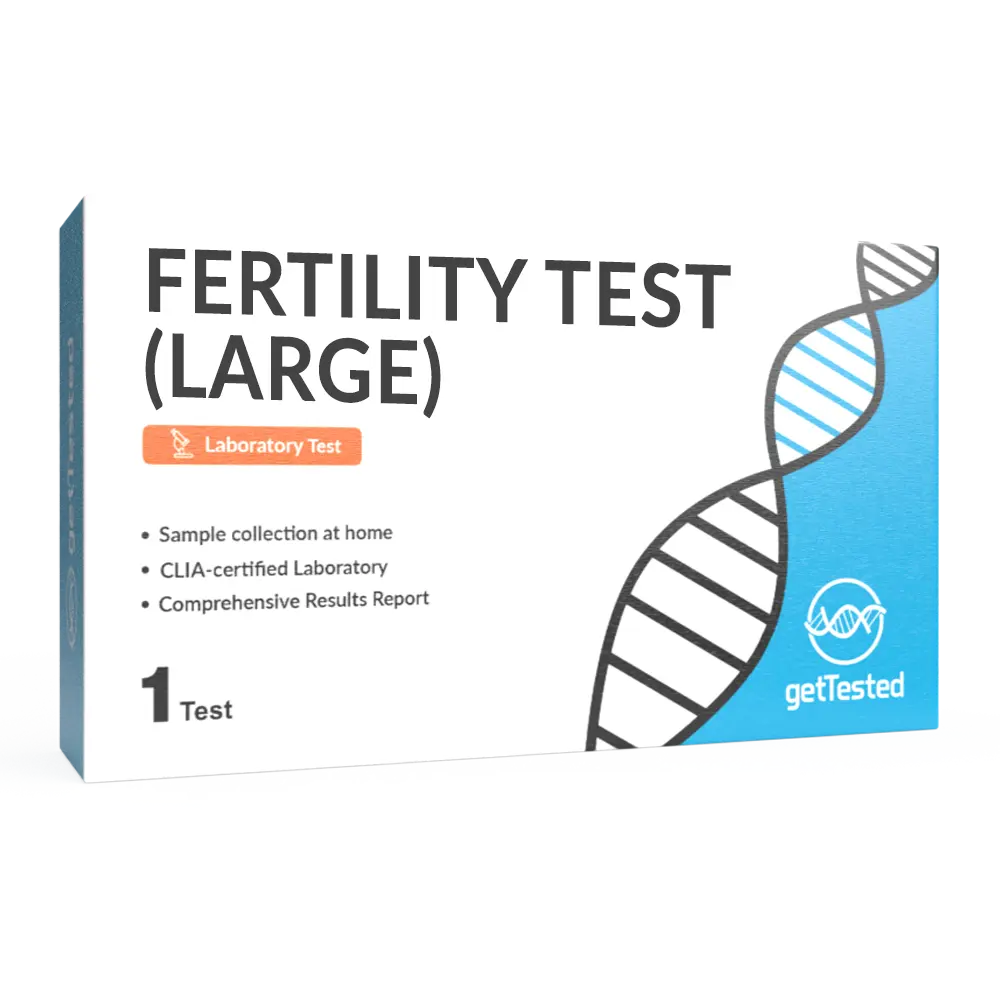
GetTested’s Fertility Test (Large) measures 11 key markers related to reproductive hormones, thyroid function, and stress response using a finger-prick blood sample collected at home.
By combining sex hormones, thyroid markers, and stress-related hormones, the test provides a broader view of hormonal balance across multiple systems, rather than focusing on a single area.
It may be particularly useful when exploring factors related to fertility, cycle changes, or transitions such as perimenopause.
Samples are analyzed in a CLIA-certified laboratory, with results delivered digitally.
$229.00
HSA & FSA eligibleAbout Fertility Test (Large)
What your hormone markers can indicate
Hormonal balance involves multiple systems that interact with each other, including reproductive hormones, thyroid function, and stress-related hormones.
Reproductive hormones such as AMH, FSH, LH, Sensitive Estradiol (E2), Progesterone, and Prolactin reflect different aspects of the menstrual cycle and fertility. Thyroid markers (TSH, fT3, and fT4) are involved in metabolism and energy regulation, while Cortisol and DHEA-S provide insight into stress-related hormone patterns.
By measuring these markers together, the test provides a broader understanding of how different hormone systems are functioning and interacting, rather than assessing each in isolation.
What This Test Measures
Biomarkers
11 biomarkers
Sample
Blood
Results in
5-7 business days
Format
Lab Test
How It Works
You collect a small blood sample at home using a finger-prick method. The sample is then sent to a CLIA-certified laboratory for analysis, and your results are delivered digitally once testing is complete.
Dried Blood Spot (DBS) Collection
The test uses a dried blood spot (DBS) sample. A few drops of blood are collected from your fingertip and placed on a collection card, which is then left to dry before being sent to the laboratory.
This method is widely used and offers a convenient alternative to traditional blood sampling.
Have Questions?
Chat with our AI assistant for instant answers about this product, usage, or recommendations.
Over 500,000 Customers
4.8 out of 5 based on 5 reviews on this product
$229.00
Fertility Test (Large)
GetTested’s Fertility Test (Large) measures 11 key markers related to reproductive hormones, thyroid function, and stress response using a finger-prick blood sample collected at home.
By combining sex hormones, thyroid markers, and stress-related hormones, the test provides a broader view of hormonal balance across multiple systems, rather than focusing on a single area.
It may be particularly useful when exploring factors related to fertility, cycle changes, or transitions such as perimenopause.
Samples are analyzed in a CLIA-certified laboratory, with results delivered digitally.
$229.00
HSA & FSA eligibleWhat your hormone markers can indicate
Hormonal balance involves multiple systems that interact with each other, including reproductive hormones, thyroid function, and stress-related hormones.
Reproductive hormones such as AMH, FSH, LH, Sensitive Estradiol (E2), Progesterone, and Prolactin reflect different aspects of the menstrual cycle and fertility. Thyroid markers (TSH, fT3, and fT4) are involved in metabolism and energy regulation, while Cortisol and DHEA-S provide insight into stress-related hormone patterns.
By measuring these markers together, the test provides a broader understanding of how different hormone systems are functioning and interacting, rather than assessing each in isolation.
What This Test Measures
Biomarkers
11 biomarkers
Sample
Blood
Results in
5-7 business days
Format
Lab Test
How It Works
You collect a small blood sample at home using a finger-prick method. The sample is then sent to a CLIA-certified laboratory for analysis, and your results are delivered digitally once testing is complete.
Dried Blood Spot (DBS) Collection
The test uses a dried blood spot (DBS) sample. A few drops of blood are collected from your fingertip and placed on a collection card, which is then left to dry before being sent to the laboratory.
This method is widely used and offers a convenient alternative to traditional blood sampling.
What is the best day of my cycle to take this test?
Timing is crucial for accurate sex hormone measurements. If you have a regular cycle, collection is recommended on Day 3 of your menstrual cycle (Day 1 is the first day of your period). Progesterone is ideally tested on Day 21. If you do not have a regular period or are in menopause, you may collect your sample on any day of the month.
How accurate is a finger-prick test compared to a doctor's office blood draw?
Studies show that Dried Blood Spot (DBS) collection is highly correlated with traditional venous blood draws for steroid and thyroid hormones. Our partner labs use the same clinical-grade diagnostic equipment found in hospitals to ensure your results are reliable and accurate.
Does hormonal birth control affect my results?
Hormonal birth control (pills, patches, or rings) suppresses the natural production of hormones like FSH, LH, and Estradiol. While you can still perform the test, the results will reflect the influence of the medication rather than your natural baseline. We recommend consulting with your healthcare provider if you wish to test your natural levels after discontinuing birth control.
Fertility Test (Large) price and what’s included
Price history
Current price
$229.00
Starting price
$229.00
Total change
$0.00
No. of changes
0
Stable Pricing
No hidden fees. The price you see is the price you pay.
Price Lock Guarantee
Your price won't change after purchase.
Have Questions About This Product?
Chat with our AI assistant for instant answers about this product, usage guidelines, or personalized recommendations.
Over 500,000 Customers
4.8 out of 5 based on 5 reviews on this product