
A herpes blood test looks for the immune system’s response to herpes simplex virus (HSV). It can reveal evidence of infection even without a visible outbreak, but it cannot tell you everything about when, where or how the infection happened.
Understanding a result starts with knowing what was tested. A blood antibody test and a swab from a sore answer different questions, and the time between infection and testing can affect what either method detects.
What does HSV IgG mean?
Antibodies are proteins the immune system produces in response to infection. IgG, short for immunoglobulin G, is one type of antibody. Some herpes blood tests look separately for IgG antibodies to HSV-1 and HSV-2, so the results distinguish the immune response to each virus type.
These antibodies generally persist indefinitely. Their presence does not show how much virus is in the body or whether an outbreak is happening. IgM testing is not recommended for herpes, because it cannot reliably distinguish the two types and may be positive during recurrent episodes.
HSV-1 commonly causes oral herpes but can also cause genital infection, while HSV-2 mainly causes genital herpes. For more about the infection itself, read our guide to herpes symptoms, transmission and outbreaks.
What does a positive herpes blood test mean?
A true positive HSV-1 IgG result indicates infection with HSV-1, but cannot show whether it is oral or genital. Many people acquire oral HSV-1 during childhood without remembering any symptoms, so a positive result does not automatically mean genital herpes.
A confirmed, type-specific HSV-2 IgG result generally indicates genital or anal infection, including in people who have never recognized an outbreak. As the CDC explains in its interpretation of herpes antibody tests, HSV-1 and HSV-2 results therefore have different implications.
Neither result reliably identifies the infection date or the transmitting partner. A first noticed outbreak may occur long after infection, and a higher antibody result does not necessarily mean a more severe or older infection.
What do negative and equivocal results mean?
A negative result means the test did not detect antibodies above its reporting threshold. It can be reassuring, but testing too soon after infection can produce a negative result before antibodies become detectable.
An equivocal result falls into the laboratory’s uncertain range: it is neither clearly positive nor clearly negative. Its meaning depends on the method and timing, and repeat testing may be needed. The report’s own reference ranges matter because laboratories do not all use identical tests or cutoffs.
How long is the herpes window period?
The window period is the time between infection and when a test can detect it. For antibody testing, this reflects the time needed for the immune system to produce enough antibodies to be measured. A blood sample collected immediately after an encounter cannot reliably exclude infection acquired during that encounter.
For suspected recent HSV-2 infection, CDC guidance recommends repeat type-specific antibody testing 12 weeks after the presumed infection. The CDC also notes that antibodies may take 16 weeks or longer to become detectable. The timing varies between people and tests, so neither 12 nor 16 weeks is a guaranteed deadline.
A visible sore raises a different testing opportunity. A swab looks for the virus directly, so there is no need to wait for antibodies to develop before testing an active lesion.
How accurate are herpes blood tests?
There is no single accuracy percentage that applies to every herpes blood test. The method, the time since infection and the likelihood of infection before testing all influence how useful a result is.
A false negative misses an existing infection, while a false positive reports evidence of infection in someone who does not have it. This is why a positive result sometimes needs confirmation rather than being accepted immediately.
Some HSV-2 antibody tests report an index value, which compares the sample’s signal with an assay cutoff. It is not a viral load or a measure of symptom severity. For HSV-2 enzyme immunoassays, particularly index values below 3.0, CDC recommends confirmation using a second method before interpretation, such as Biokit or Western blot. That threshold should not be applied automatically to every testing method.
Repeating the same test is not always enough to resolve a false positive. If confirmation is unavailable, the limitations and possibility of false-positive results should be explained before testing.
Herpes blood test vs. swab: what is the difference?
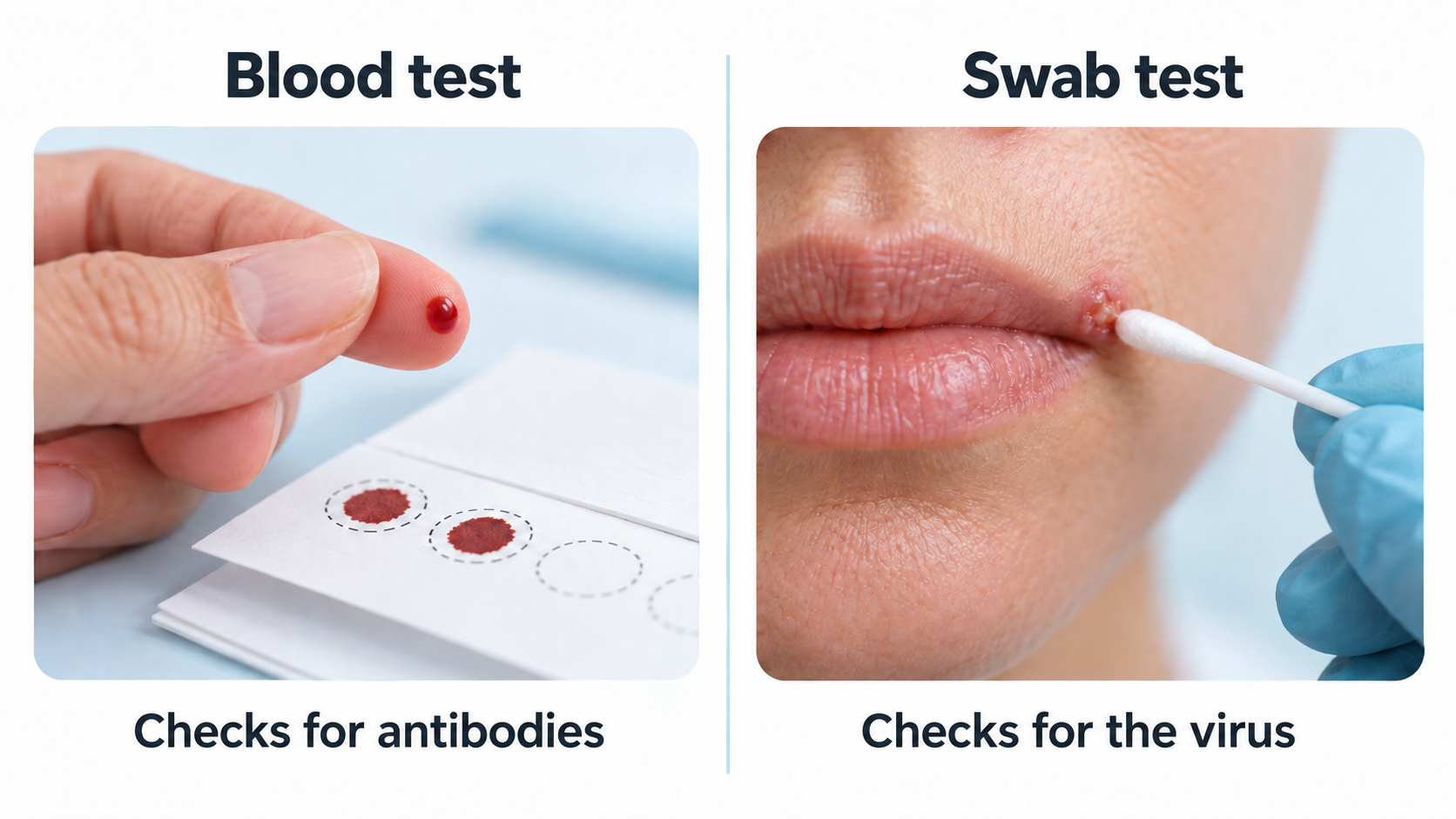
A blood antibody test asks whether the body has developed a detectable immune response to HSV. A swab from a blister or ulcer asks whether the virus is present at that specific site. This makes a swab more useful for determining whether a particular sore is herpes.
A swab-based PCR test detects the virus’s genetic material. MedlinePlus explains how PCR differs from viral culture, which attempts to grow the virus from the sample. Collection timing matters, particularly as sores heal, and a negative swab does not always exclude infection.
For home blood collection, GetTested’s Herpes Test (HSV-1 & HSV-2) measures IgG antibodies to both types using a finger-prick dried blood spot sample sent to a laboratory. It measures the antibody response rather than testing an active sore, so the timing and interpretation limitations described above still apply.
Can you test without symptoms?
Antibody testing does not require an outbreak, but that does not mean everyone without symptoms benefits from testing. The U.S. Preventive Services Task Force recommends against routine genital herpes antibody screening in people without symptoms, partly because false-positive results can cause unnecessary distress.
Antibody testing can provide useful information when a partner has genital herpes or when recurring symptoms remain unexplained after a swab test. The choice of test depends on what you want to find out: whether there is evidence of infection or whether a particular sore is caused by HSV.