
A cold sore on the lip and a genital herpes outbreak may seem like different conditions, but both can be caused by herpes simplex virus (HSV). This common virus can produce painful blisters, cause symptoms so mild they go unnoticed, or remain present without any recognized outbreak.
Understanding herpes starts with separating three things: the virus type, where the infection occurs, and whether it causes symptoms. Having HSV does not necessarily mean having visible sores or knowing when the infection was acquired.
What is the difference between HSV-1 and HSV-2?
HSV-1 most commonly causes oral herpes, including cold sores around the lips. Many people acquire it during childhood through nonsexual contact. However, HSV-1 can also cause genital herpes, particularly through oral sex.
HSV-2 mainly causes genital herpes, affecting the genital or anal area. The types cannot reliably be distinguished by how a sore looks. According to the CDC’s herpes guidance, genital HSV-2 generally causes more frequent recurrences and symptom-free viral shedding than genital HSV-1. The numbers describe the virus type, not a fixed location in the body.
How common is herpes?
HSV-1 is considerably more widespread than HSV-2. WHO estimates based on 2020 data indicate that 64% of people under 50 worldwide had HSV-1, while approximately 13% of people ages 15–49 had HSV-2. These figures describe infection, not how many people experience outbreaks.
In the United States, a CDC/NCHS national survey from 2015–2016 found HSV-1 antibodies in 47.8% and HSV-2 antibodies in 11.9% of people ages 14–49. These are historical estimates for that age group, rather than current rates for every American. Antibody testing also cannot show whether someone has ever had noticeable symptoms, and HSV-1 antibodies do not distinguish oral from genital infection.
What are the symptoms, and what does herpes look like?
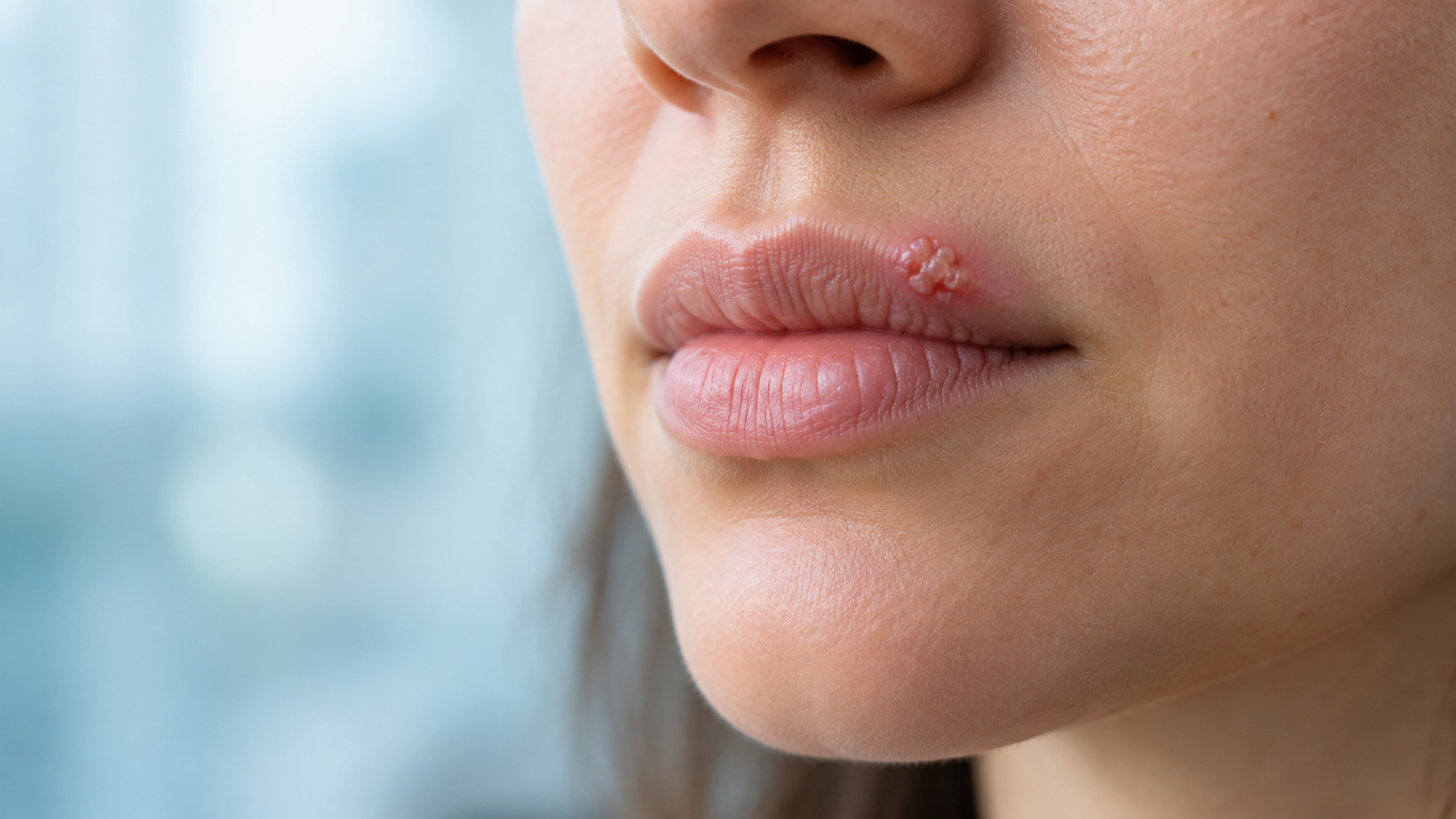
An outbreak may begin with tingling, itching or burning before sores appear. Small, painful blisters can develop, sometimes grouped together, then break open into shallow sores. Lesions on external skin may crust as they heal, while those on moist surfaces may not form a scab.
Oral herpes commonly affects the lips or surrounding skin. Genital herpes can affect the vulva, penis, anus, buttocks or nearby areas, and internal sores may be harder to see. Urination can hurt, especially when urine touches affected skin. A first symptomatic episode may also involve fever, body aches and swollen lymph nodes.
Not every outbreak has the familiar cluster of blisters. Mild episodes may resemble a small crack, an irritated patch or a pimple. Herpes symptoms can be mistaken for other skin problems, including ingrown hairs or shaving irritation, so appearance alone cannot reliably identify the infection. The basic symptoms overlap between men and women; their location and visibility vary with anatomy.
Can you have herpes without an outbreak?
Many people have no noticeable symptoms, while others experience mild symptoms without recognizing them as herpes. An infection can therefore remain unnoticed for years, whether someone has never had an outbreak or has mistaken subtle symptoms for something else.
Neither situation means transmission is impossible. HSV can occasionally be present on skin or mucosal surfaces without visible sores, a process called asymptomatic viral shedding. The CDC explains that transmission can occur without visible symptoms, meaning someone can pass on the virus without knowing they have it.
How is herpes transmitted?
HSV spreads primarily through direct contact with infected skin or mucosal surfaces. Kissing can transmit oral herpes, while oral, vaginal or anal sexual contact can transmit genital herpes. Oral HSV-1 can also reach the genitals during oral sex, and genital transmission does not require penetration or ejaculation.
Transmission risk is greatest when sores are present, but infection can spread between outbreaks. Condoms reduce risk without eliminating it because nearby skin may remain uncovered. Toilet seats, swimming pools and ordinary contact with household objects are not typical routes of genital herpes transmission.
Why does herpes return, and do outbreaks get milder?
After infection, HSV remains inactive inside nerve cells and can later reactivate. This explains why an outbreak can occur after months or years without symptoms. Illness, stress, sunlight for oral herpes and menstrual periods can trigger recurrences, although many episodes have no clear trigger.
Recurrent outbreaks are usually shorter and less severe than the first symptomatic episode, and their frequency often decreases over time. However, each outbreak is not necessarily milder than the one before it. Antiviral medications can reduce symptoms and recurrences, but do not remove the latent virus. A newly noticed outbreak also does not establish when infection occurred or which partner transmitted it.
What can herpes tests tell you?
A swab from an active sore looks for the virus at that location, while a blood antibody test looks for the immune response to HSV. Antibodies take time to develop, so early testing can miss infection. HSV-1 antibodies cannot establish whether infection is oral or genital, and neither test can reliably identify the transmitting partner or infection date.
CDC guidance recommends confirming low-positive HSV-2 enzyme immunoassay results using a second method before interpretation, particularly for index values below 3.0, because false positives occur in this range. If confirmation is unavailable, the limitations and possibility of false positives should be explained before testing. The USPSTF recommends against routine antibody screening in people without symptoms.
GetTested’s Herpes Test (HSV-1 & HSV-2) measures IgG antibodies to both virus types using a finger-prick dried blood spot sample collected at home and sent to a laboratory. It looks for the body’s immune response rather than the virus in an active sore, so it cannot show whether an outbreak is occurring or when the infection was acquired. Results need to be interpreted alongside the timing of testing and the limitations described above.
This article provides general information and does not replace professional medical advice.