Neurotransmitter & Metabolites Test
Get a clinical-grade neurotransmitter test at home. Measures 26 markers including serotonin, dopamine, and kynurenine metabolites for mood and focus.
Product details: USD 249 — InStock — SKU gettested_neurotransmitter_and_metabolites_test — GetTested
About this test
How It Works
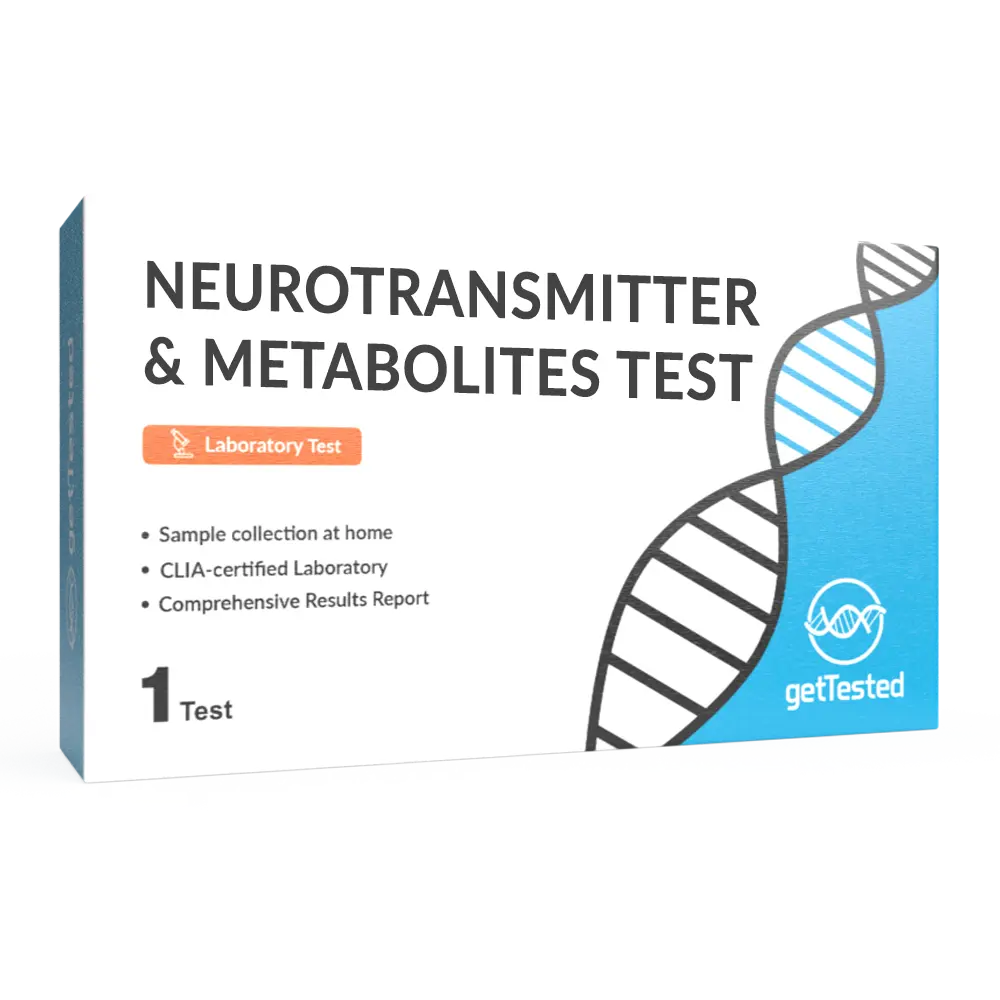
You collect a dried urine sample at home using the collection kit provided. The sample is then sent to a CLIA-certified laboratory for analysis.
Your results are delivered digitally once testing is complete.
Sample Collection (Dried Urine)
The test uses a dried urine sample collected on filter paper at specific time points.
This method allows for stabilization of metabolites during transport and provides a practical way to assess multiple biochemical markers related to neurotransmitter pathways.
Interpreting Neurotransmitter Pathways
Individual neurotransmitter levels can be difficult to interpret in isolation.
By assessing precursors, active neurotransmitters, and downstream metabolites together, this test provides context to how neurotransmitter pathways are functioning. This includes insight into synthesis, conversion, and breakdown processes within each pathway.
This approach allows for a more detailed understanding of pathway activity rather than focusing on single marker levels.
Neurotransmitter Pathways
Neurotransmitters are produced and metabolized through interconnected pathways.
For example:
Tryptophan → serotonin → 5-HIAA
Tyrosine → dopamine → DOPAC / HVA
Tyrosine → norepinephrine → epinephrine → VMA
Assessing multiple points within these pathways can help illustrate how neurotransmitters are synthesized, converted, and broken down.
Kynurenine Pathway
The kynurenine pathway reflects the metabolism of tryptophan away from serotonin production.
Markers such as kynurenine, kynurenic acid, and 3-hydroxykynurenine provide additional context to how tryptophan is being utilized and how pathway balance may shift.
Preparation Instructions
Follow the instructions provided in your kit carefully for proper sample collection.
Avoid collecting samples during acute illness or significant stress, as this may influence metabolite levels.
Who Should Consider This Test
This test is relevant for individuals seeking a more detailed analysis of neurotransmitter pathways and related metabolic processes.
It may be particularly useful when exploring biochemical patterns, pathway imbalances, or when a more in-depth assessment is desired beyond individual neurotransmitter measurements.
Understanding CLIA Certification
Your sample is analyzed in a CLIA-certified laboratory, ensuring that testing is performed according to established U.S. quality standards using validated methods.
Biomarkers included
- GABA: GABA (gamma-aminobutyric acid) is the brain’s primary inhibitory neurotransmitter and helps regulate neuronal excitability by promoting calm signaling and preventing overstimulation. It counterbalances excitatory neurotransmitters such as glutamate and is involved in pathways related to stress regulation, sleep, mood, and muscle tone. Altered GABA signaling has been linked to conditions such as an
- Vanillylmandelic acid (VMA): Vanillylmandelic acid (VMA) is a metabolite formed from the breakdown of catecholamines such as adrenaline, noradrenaline, and dopamine. It is used as a clinical marker to assess catecholamine activity, with levels typically measured in urine. Various factors, including certain foods and medications, can influence VMA levels.
- Dopamine: Dopamine is a key neurotransmitter that supports the brain’s reward and motivation systems. It plays essential roles in mood regulation, pleasure, focus, memory, and movement control. Imbalances in dopamine levels can affect mental well-being and are linked to conditions such as depression, anxiety, and Parkinson’s disease.
- Phenethylamine / β-Phenethylamine: Phenethylamine is a trace amine and neuromodulator produced from the amino acid phenylalanine. It is related to the dopamine system and can influence the release and activity of dopamine and other catecholamines. PEA is thought to play a role in mood, motivation, focus, and alertness, and it may contribute to the brain’s reward and stimulation pathways.
- Normetanephrine: Normetanephrine is a metabolite of norepinephrine (noradrenaline) formed when norepinephrine is broken down by the enzyme COMT. Norepinephrine is an important neurotransmitter and hormone involved in the body’s stress response, alertness, focus, and regulation of blood pressure and heart rate. Measuring normetanephrine provides information about catecholamine metabolism and how the body processes
- Xanthurenic Acid: Xanthurenic Acid is a metabolite formed during the breakdown of the amino acid tryptophan through the kynurenine pathway. Its levels can reflect vitamin B6 (pyridoxine) status, as this vitamin acts as a vital cofactor in the process. Elevated xanthurenate may indicate a deficiency in vitamin B6.
- N-Methylhistamine: N-Methylhistamine is a metabolite of histamine, produced when histamine is broken down in the body. Histamine plays roles in the immune system, allergic responses, stomach acid production, and signaling in the nervous system. Measuring N-methylhistamine helps provide insight into histamine activity and metabolism, which can reflect how actively histamine is being produced and processed in the body
- Histidine: Histidine is an essential amino acid, particularly important for growth and tissue repair. It's a precursor to histamine, a molecule involved in immune responses, digestion, and sleep-wake cycles. Histidine also plays a role in maintaining the myelin sheath that protects nerve cells. Imbalances can be associated with inflammatory conditions, allergies, and neurological disorders.
- 5-Hydroxyindoleacetic Acid (5-HIAA): 5-Hydroxyindoleacetic Acid (5-HIAA) is the main breakdown product of serotonin, a neurotransmitter involved in mood, sleep, appetite, gut motility and other body functions. Measuring 5-HIAA in urine can give insight into serotonin turnover, meaning how serotonin is being produced, used and metabolised. Higher or lower levels may reflect changes in serotonin metabolism, but should not be interprete
- Taurine: Taurine is a sulfur-containing amino acid, though not incorporated into proteins, that plays a crucial role in various physiological processes. It is vital for bile acid conjugation, osmoregulation, membrane stabilization, and neurotransmission. Its levels can indicate nutritional status, cardiovascular health, and neurological function.
- Noradrenaline/Norepinephrine: Noradrenaline, also called norepinephrine, is a chemical that functions as both a hormone and a neurotransmitter in the body. It plays a key role in the fight-or-flight response, enhancing alertness, arousal, and reaction speed. Noradrenaline also supports mood regulation and helps maintain blood pressure by constricting blood vessels.
- Adrenaline/Epinephrine: Adrenaline (epinephrine) is a hormone and neurotransmitter released by the adrenal glands. It plays a critical role in the body’s fight-or-flight response, preparing the body for rapid action during stress. Adrenaline elevates heart rate, widens airways, and enhances energy availability, supporting quick and effective survival responses.
- Glutamine: Glutamine is the most abundant free amino acid in the body and is important for protein synthesis, nitrogen transport, and overall amino acid metabolism. It serves as a key fuel source for rapidly dividing cells, including immune cells and intestinal cells (enterocytes), supporting immune function and gut barrier integrity. Glutamine also participates in pathways related to acid–base balance and t
- Creatinine: Creatinine is a waste product formed in muscles from the normal breakdown of creatine. It is released into the bloodstream and filtered by the kidneys, then excreted in urine. Because creatinine levels are influenced by how efficiently the kidneys filter blood, it is commonly used to assess kidney function. Elevated creatinine may indicate reduced kidney filtration or kidney disease, while low lev
- Kynurenic acid: Kynurenic acid is a metabolite formed in the kynurenine pathway during the breakdown of the amino acid tryptophan. It functions in the nervous system as a neuroprotective agent and is of interest in neurological and psychiatric research. Imbalances in kynurenic acid levels have been associated with conditions such as schizophrenia and depression.
- Tyrosine: Tyrosine is a non-essential amino acid that serves as a building block for proteins and is crucial for synthesizing neurotransmitters like dopamine, norepinephrine, and epinephrine, as well as thyroid hormones. Its levels are important for proper brain function, mood regulation, and metabolic health. Imbalances can be indicative of metabolic disorders or nutritional deficiencies.
- Glycine: Glycine is the simplest amino acid and is involved in protein synthesis and many important metabolic pathways. It contributes to neurotransmission in the nervous system and is a building block for compounds such as glutathione (antioxidant defense), creatine (energy metabolism), and heme (oxygen transport). Glycine can be produced in the body, but requirements may increase under certain conditions
- Serotonin: Serotonin is a key neurotransmitter often called the “happiness chemical,” involved in regulating mood and emotional well-being. It also plays important roles in sleep, digestion, bone health, and blood clotting. Mainly produced in the gut, serotonin influences both the brain and body by affecting various physiological functions and emotional states. Imbalances in serotonin levels can have signifi
- Homovanillic acid (HVA): Homovanillic acid (HVA) is a metabolite that reflects the breakdown of dopamine, a key neurotransmitter in the body. HVA levels serve as an important marker for evaluating dopamine activity. Changes in HVA can indicate shifts in dopamine function and are used to monitor the effectiveness of treatments targeting dopamine metabolism.
- Tyramine: Tyramine is a natural substance that the body produces from the amino acid tyrosine. It can also be found in certain foods, especially aged or fermented foods such as aged cheese, fermented soy products, and cured meats. In simple terms, tyramine is involved in the system that helps produce important brain chemicals like dopamine and norepinephrine, which play roles in mood, alertness, and the bod
- Tryptophan: Tryptophan is an essential amino acid, meaning the human body cannot produce it and must obtain it through diet. It serves as a precursor for crucial molecules like serotonin (a neurotransmitter regulating mood, sleep, and appetite) and melatonin (a hormone central to sleep-wake cycles). Optimal tryptophan levels are vital for neurological function, mental health, and sleep regulation.
- 3-Hydroxykynurenine: 3-Hydroxykynurenine (3-OH-kynurenine) is a metabolite in the kynurenine pathway, which reflects the breakdown of the amino acid tryptophan. It serves as an intermediate compound during the conversion of tryptophan into important molecules, including the essential coenzyme NAD+ (nicotinamide adenine dinucleotide).
- Histamine: Histamine is a biogenic amine and signaling molecule involved in immune responses, gastric acid secretion, and neurotransmission. It is released by mast cells and basophils during allergic reactions and inflammatory responses, causing vasodilation, increased vascular permeability, and smooth muscle contraction. Histamine also regulates stomach acid production and functions as a neurotransmitter in
- Kynurenine: Kynurenine is a key metabolite in the tryptophan degradation pathway, playing important roles in immune regulation, neuroprotection, and inflammation. The kynurenine pathway is activated during immune responses and chronic inflammation, with various metabolites exerting either neuroprotective or neurotoxic effects. Elevated kynurenine relative to tryptophan (kynurenine/tryptophan ratio) indicates
- Glutamate: Glutamate is a key excitatory neurotransmitter in the brain that plays a vital role in cognitive processes such as learning and memory. It is essential for brain development and synaptic plasticity. However, excessive glutamate levels can cause neuronal overstimulation, leading to potential neurotoxicity. This balance makes glutamate critical for normal brain function while also linking it to vari
- DOPAC: 3,4-Dihydroxyphenylacetic acid / DOPAC is one of the main metabolites of dopamine, formed when dopamine is broken down by enzymes such as monoamine oxidase. Because dopamine is involved in movement, motivation, attention, and reward signaling, measuring DOPAC can help indicate dopamine turnover, meaning how actively dopamine is being produced, used, and metabolized in the body.
How to prepare
Collect the first morning void or follow the specific time-of-day instructions provided in the kit. Avoid excessive liquid intake the night before. Certain supplements and foods may need to be restricted for 24-48 hours; please read the full instruction manual included in the kit before starting.
Frequently asked questions
How accurate is dried urine compared to liquid urine?
Dried urine is highly stable. Once the sample dries on the filter paper, the neurotransmitters and metabolites are preserved for transport without the need for refrigeration or dry ice, which often degrades liquid samples. This ensures your functional medicine neurotransmitter panel remains accurate regardless of shipping times.
Should I stop my antidepressants before testing?
You should not stop prescribed medications without consulting your physician. However, SSRIs, SNRIs, and MAOIs will significantly impact your results. The test remains valuable as it can show how your body is metabolizing these medications and whether your serotonin/dopamine pathways are responding.
Can this test diagnose ADHD or Depression?
No. This test provides biochemical data for nutritional and functional assessment. It is not a diagnostic tool for clinical depression, ADHD, or anxiety disorders as defined by the DSM-5. It is designed to help identify biochemical imbalances that may contribute to these conditions.
Why do you measure metabolites instead of just the neurotransmitters?
Metabolites are the breakdown products of neurotransmitters. Measuring them (like utilizing a dopamine metabolite urine test for HVA) tells us not just how much of a chemical you have, but how fast you are using it or 'burning through' it. This provides a dynamic view of your neurological health.
Customer reviews
4.6/5 (5)
- 5/5 — Super easy collection process and the results arrived sooner than I expected.
- 5/5 — Very advanced test, highly recommend!!!
- 5/5 — Fast shipping and high quality kit.
- 4/5 — Great test, though I wish the lab turnaround was a day or two faster. Extremely detailed report though.
- 4/5 — Really helpful data for my brain fog. The instructions about supplements were a bit dense but I figured it out.