Iodine & Toxic Elements Test
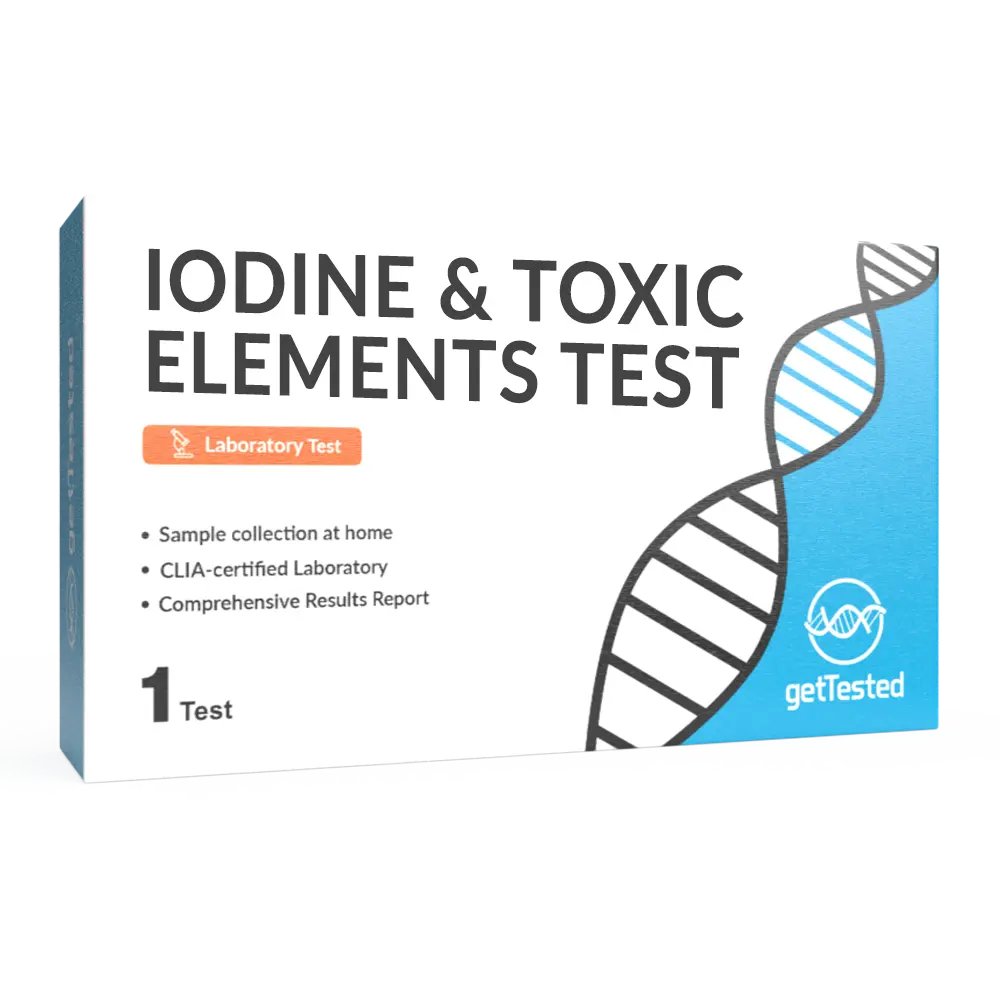
GetTested’s Iodine & Toxic Elements Test measures eight key elements using a dried urine sample collected at home.
The panel includes iodine, selenium, and bromine, along with selected toxic elements such as arsenic, cadmium, and mercury, providing insight into both nutritional status and potential environmental exposure.
Samples are analyzed in a certified laboratory, with results delivered digitally.
$149.00
HSA & FSA eligible
About Iodine & Toxic Elements Test
What your results can reveal
Iodine is essential for the production of thyroid hormones, which regulate metabolism, energy levels, and overall physiological balance.
At the same time, exposure to environmental elements such as arsenic, cadmium, and mercury can occur through food, water, and surroundings. These elements may accumulate in the body over time and can influence various biological processes.
By measuring iodine alongside both essential and toxic elements, this test provides a broader perspective on how nutritional status and environmental exposure may interact.
Creatinine is included to account for urine concentration, supporting more accurate interpretation of results.
What This Test Measures
Biomarkers
8 biomarkers
Sample
Urine
Results in
5-10 business days
Format
Lab Test
How It Works
You collect your sample at home using the instructions provided in the kit. The sample is then sent to a certified laboratory for analysis, and your results are delivered digitally once testing is complete.
Dried Urine Collection
The test uses a dried urine sample collected at home.
This method allows for convenient sampling without the need for blood collection and is commonly used for assessing elements and metabolites. Once collected, the sample is dried and sent to the laboratory for analysis.
Have Questions?
Chat with our AI assistant for instant answers about this product, usage, or recommendations.
Over 500,000 Customers
4.8 out of 5 based on 5 reviews on this product
$149.00
Iodine & Toxic Elements Test
GetTested’s Iodine & Toxic Elements Test measures eight key elements using a dried urine sample collected at home.
The panel includes iodine, selenium, and bromine, along with selected toxic elements such as arsenic, cadmium, and mercury, providing insight into both nutritional status and potential environmental exposure.
Samples are analyzed in a certified laboratory, with results delivered digitally.
$149.00
HSA & FSA eligibleWhat your results can reveal
Iodine is essential for the production of thyroid hormones, which regulate metabolism, energy levels, and overall physiological balance.
At the same time, exposure to environmental elements such as arsenic, cadmium, and mercury can occur through food, water, and surroundings. These elements may accumulate in the body over time and can influence various biological processes.
By measuring iodine alongside both essential and toxic elements, this test provides a broader perspective on how nutritional status and environmental exposure may interact.
Creatinine is included to account for urine concentration, supporting more accurate interpretation of results.
What This Test Measures
Biomarkers
8 biomarkers
Sample
Urine
Results in
5-10 business days
Format
Lab Test
How It Works
You collect your sample at home using the instructions provided in the kit. The sample is then sent to a certified laboratory for analysis, and your results are delivered digitally once testing is complete.
Dried Urine Collection
The test uses a dried urine sample collected at home.
This method allows for convenient sampling without the need for blood collection and is commonly used for assessing elements and metabolites. Once collected, the sample is dried and sent to the laboratory for analysis.
What exactly does this test tell me about my health?
How accurate are dried urine samples for these elements compared to other methods?
Is the home collection process difficult or messy for this urine test?
How long does it take to get my results back, and what do they look like?
Iodine & Toxic Elements Test price and what’s included
Price history
Current price
$149.00
Starting price
$149.00
Total change
$0.00
No. of changes
0
Stable Pricing
No hidden fees. The price you see is the price you pay.
Price Lock Guarantee
Your price won't change after purchase.
Have Questions About This Product?
Chat with our AI assistant for instant answers about this product, usage guidelines, or personalized recommendations.
Over 500,000 Customers
4.8 out of 5 based on 5 reviews on this product