hs-CRP Test – High-Sensitivity CRP
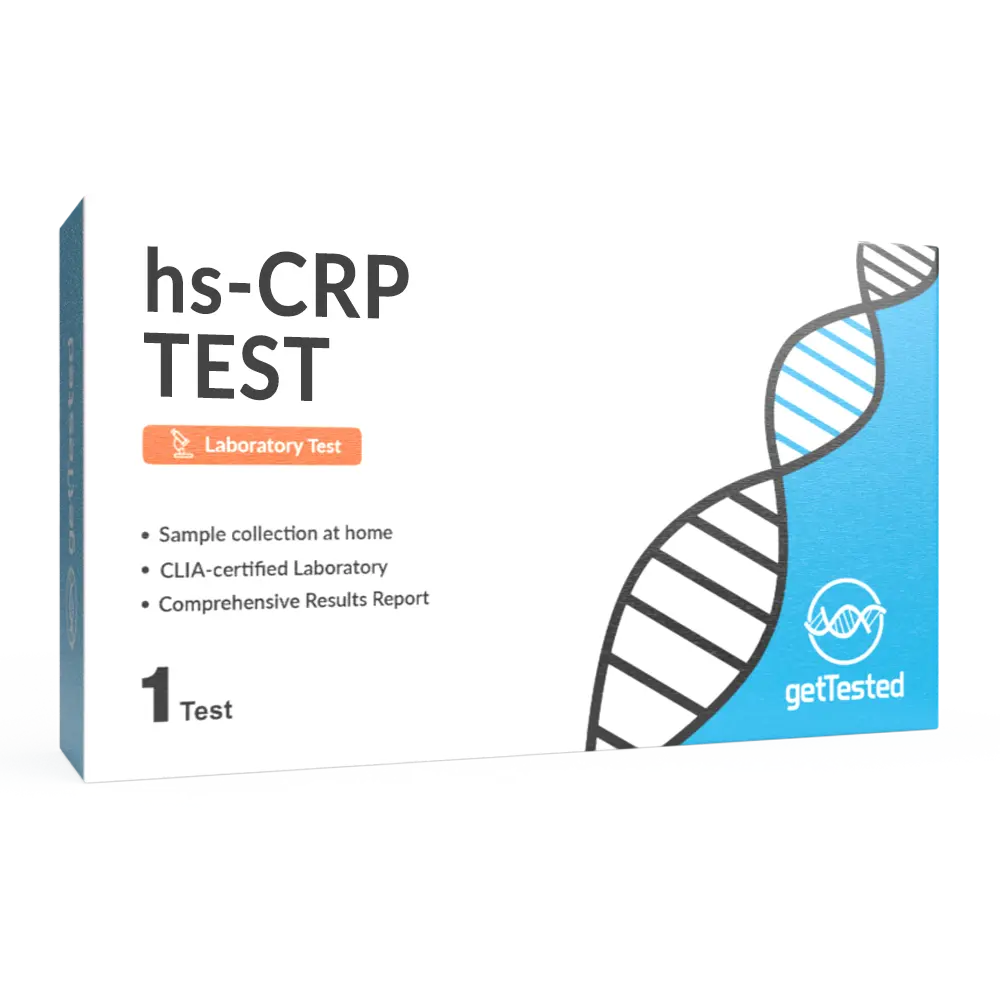
The GetTested hs-CRP Test is an at-home dried blood spot (DBS) test that measures high-sensitivity C-reactive protein, a marker of low-grade inflammation linked to cardiovascular risk. You collect a small blood sample at home and receive your results digitally.
$99.00
HSA & FSA eligible

About hs-CRP Test – High-Sensitivity CRP
Assess Inflammation with the GetTested hs-CRP Test
What This Test Measures
Biomarkers
1 biomarkers
Sample
Blood
Results in
2-5 business days after sample arrives at lab
Format
Lab Test
How It Works: Simple At-Home Testing
The GetTested hs-CRP Test offers a straightforward process for at-home sample collection and laboratory analysis:
Order Your Kit: Purchase your hs-CRP test kit online, delivered directly to your doorstep.
Collect Your Sample: Follow the detailed instructions to perform a simple finger-prick blood collection using the provided lancet and collect a few drops onto the specialized dried blood spot (DBS) card. A step-by-step guide and video tutorial are available to assist you.
Mail Your Sample: Send your collected sample to our certified laboratory using the pre-paid return envelope.
Receive Your Results: Once processed, your secure digital results will be available online within 3–5 business days.
Have Questions?
Chat with our AI assistant for instant answers about this product, usage, or recommendations.
Over 500,000 Customers
4.5 out of 5 based on 2 reviews on this product
$99.00
hs-CRP Test – High-Sensitivity CRP
The GetTested hs-CRP Test is an at-home dried blood spot (DBS) test that measures high-sensitivity C-reactive protein, a marker of low-grade inflammation linked to cardiovascular risk. You collect a small blood sample at home and receive your results digitally.
$99.00
HSA & FSA eligibleAssess Inflammation with the GetTested hs-CRP Test
What This Test Measures
Biomarkers
1 biomarkers
Sample
Blood
Results in
2-5 business days after sample arrives at lab
Format
Lab Test
How It Works: Simple At-Home Testing
The GetTested hs-CRP Test offers a straightforward process for at-home sample collection and laboratory analysis:
Order Your Kit: Purchase your hs-CRP test kit online, delivered directly to your doorstep.
Collect Your Sample: Follow the detailed instructions to perform a simple finger-prick blood collection using the provided lancet and collect a few drops onto the specialized dried blood spot (DBS) card. A step-by-step guide and video tutorial are available to assist you.
Mail Your Sample: Send your collected sample to our certified laboratory using the pre-paid return envelope.
Receive Your Results: Once processed, your secure digital results will be available online within 3–5 business days.
What is the GetTested hs-CRP Test and why is hs-CRP important for my health assessment?
How does the at-home hs-CRP test work, and what is the sample collection process?
Who should consider taking the GetTested hs-CRP Test?
How accurate and reliable is the dried blood spot (DBS) method for hs-CRP testing compared to a traditional venous blood draw?
How soon will I receive my results and how are they interpreted?
What factors can influence my hs-CRP levels, and how can I optimize them?
What should I do if my hs-CRP levels are elevated?
hs-CRP Test – High-Sensitivity CRP price and what’s included
Price history
Current price
$99.00
Starting price
$99.00
Total change
$0.00
No. of changes
0
Stable Pricing
No hidden fees. The price you see is the price you pay.
Price Lock Guarantee
Your price won't change after purchase.
Have Questions About This Product?
Chat with our AI assistant for instant answers about this product, usage guidelines, or personalized recommendations.
Over 500,000 Customers
4.5 out of 5 based on 2 reviews on this product