Female Cycle Mapping Test
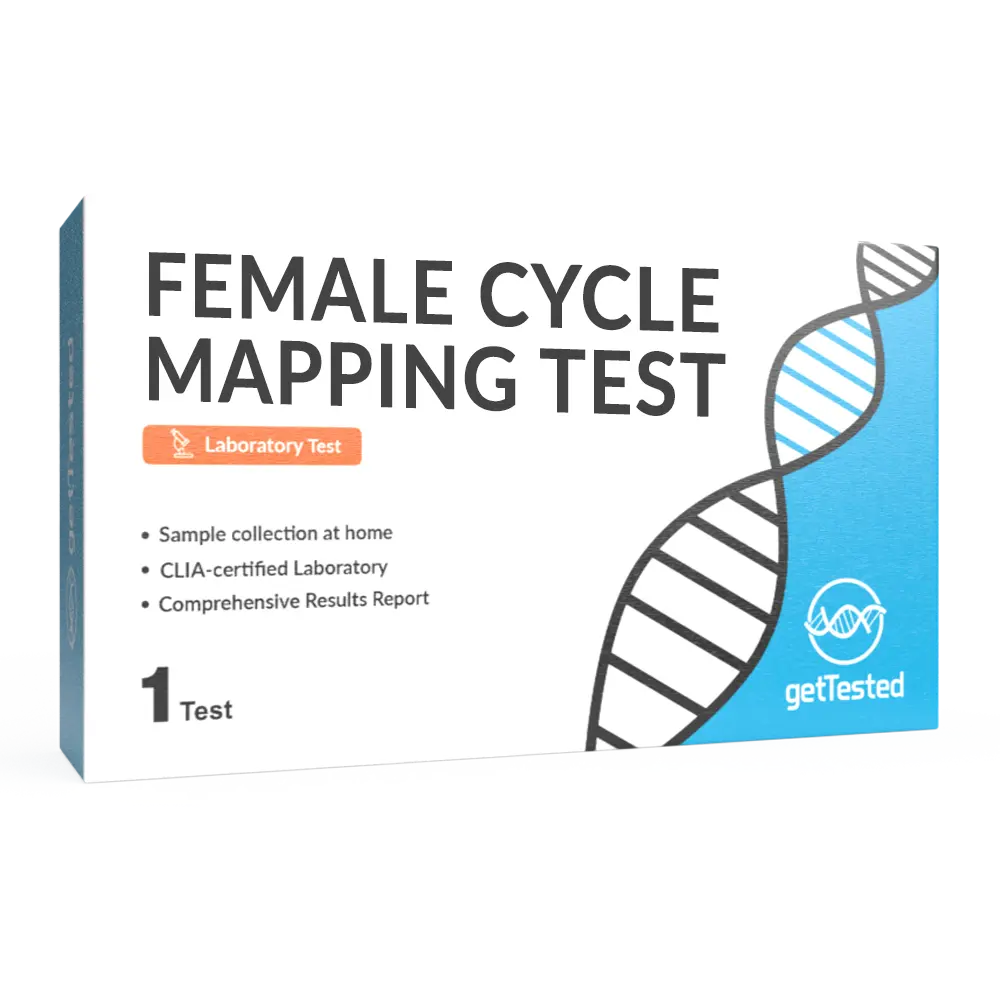
GetTested’s Female Cycle Mapping Test provides a detailed view of how hormones fluctuate throughout the menstrual cycle.
Instead of relying on a single measurement, this test tracks changes across the cycle, which may help provide insight into cycle phases, ovulation timing, and overall hormonal patterns.
Samples are collected every other day over approximately one month (15 collections total), allowing hormone trends to be captured throughout the full cycle.
Samples are analyzed in a CLIA-certified laboratory, with results delivered digitally.
$549.00
HSA & FSA eligible
About Female Cycle Mapping Test
What your cycle patterns can reveal
Hormone levels fluctuate throughout the menstrual cycle and influence its different phases, including follicular phase, ovulation, and luteal phase.
Because these changes occur continuously, a single measurement may not reflect the full picture. By tracking hormones repeatedly over time, patterns in hormone levels and cycle dynamics can be observed.
Markers related to estrogen (E1G), progesterone (via PdG), and ovulation (LH) are measured throughout the cycle, providing insight into how these hormones rise and fall over time.
This approach can help illustrate cycle phases, timing of ovulation, and overall hormonal variation across the month.
What This Test Measures
Biomarkers
4 biomarkers
Sample
Urine
Results in
5-10 business days from lab receipt
Format
Lab Test
How It Works
You collect urine samples at home every other day over approximately one month, following the instructions provided in your kit.
Each sample is dried and sent to a CLIA-certified laboratory for analysis. Your results are then delivered digitally once testing is complete.
Dried Urine Collection
The test uses dried urine samples collected at home.
This method allows for convenient, repeated sampling without the need for blood collection and is commonly used for assessing hormone metabolites over time. Once collected, samples are dried and sent to the laboratory for analysis.
Have Questions?
Chat with our AI assistant for instant answers about this product, usage, or recommendations.
Over 500,000 Customers
4.8 out of 5 based on 5 reviews on this product
$549.00
Female Cycle Mapping Test
GetTested’s Female Cycle Mapping Test provides a detailed view of how hormones fluctuate throughout the menstrual cycle.
Instead of relying on a single measurement, this test tracks changes across the cycle, which may help provide insight into cycle phases, ovulation timing, and overall hormonal patterns.
Samples are collected every other day over approximately one month (15 collections total), allowing hormone trends to be captured throughout the full cycle.
Samples are analyzed in a CLIA-certified laboratory, with results delivered digitally.
$549.00
HSA & FSA eligibleWhat your cycle patterns can reveal
Hormone levels fluctuate throughout the menstrual cycle and influence its different phases, including follicular phase, ovulation, and luteal phase.
Because these changes occur continuously, a single measurement may not reflect the full picture. By tracking hormones repeatedly over time, patterns in hormone levels and cycle dynamics can be observed.
Markers related to estrogen (E1G), progesterone (via PdG), and ovulation (LH) are measured throughout the cycle, providing insight into how these hormones rise and fall over time.
This approach can help illustrate cycle phases, timing of ovulation, and overall hormonal variation across the month.
What This Test Measures
Biomarkers
4 biomarkers
Sample
Urine
Results in
5-10 business days from lab receipt
Format
Lab Test
How It Works
You collect urine samples at home every other day over approximately one month, following the instructions provided in your kit.
Each sample is dried and sent to a CLIA-certified laboratory for analysis. Your results are then delivered digitally once testing is complete.
Dried Urine Collection
The test uses dried urine samples collected at home.
This method allows for convenient, repeated sampling without the need for blood collection and is commonly used for assessing hormone metabolites over time. Once collected, samples are dried and sent to the laboratory for analysis.
What hormones does the GetTested Advanced Female Hormone Mapping Test measure and why are they important?
How accurate is dried urine hormone testing compared to blood or saliva tests?
How do I collect the dried urine samples for this at home hormone test, and is it easy?
How often do I need to collect samples, and for how long, for this menstrual cycle hormone tracking test?
Female Cycle Mapping Test price and what’s included
Price history
Current price
$549.00
Starting price
$549.00
Total change
$0.00
No. of changes
0
Stable Pricing
No hidden fees. The price you see is the price you pay.
Price Lock Guarantee
Your price won't change after purchase.
Have Questions About This Product?
Chat with our AI assistant for instant answers about this product, usage guidelines, or personalized recommendations.
Over 500,000 Customers
4.8 out of 5 based on 5 reviews on this product