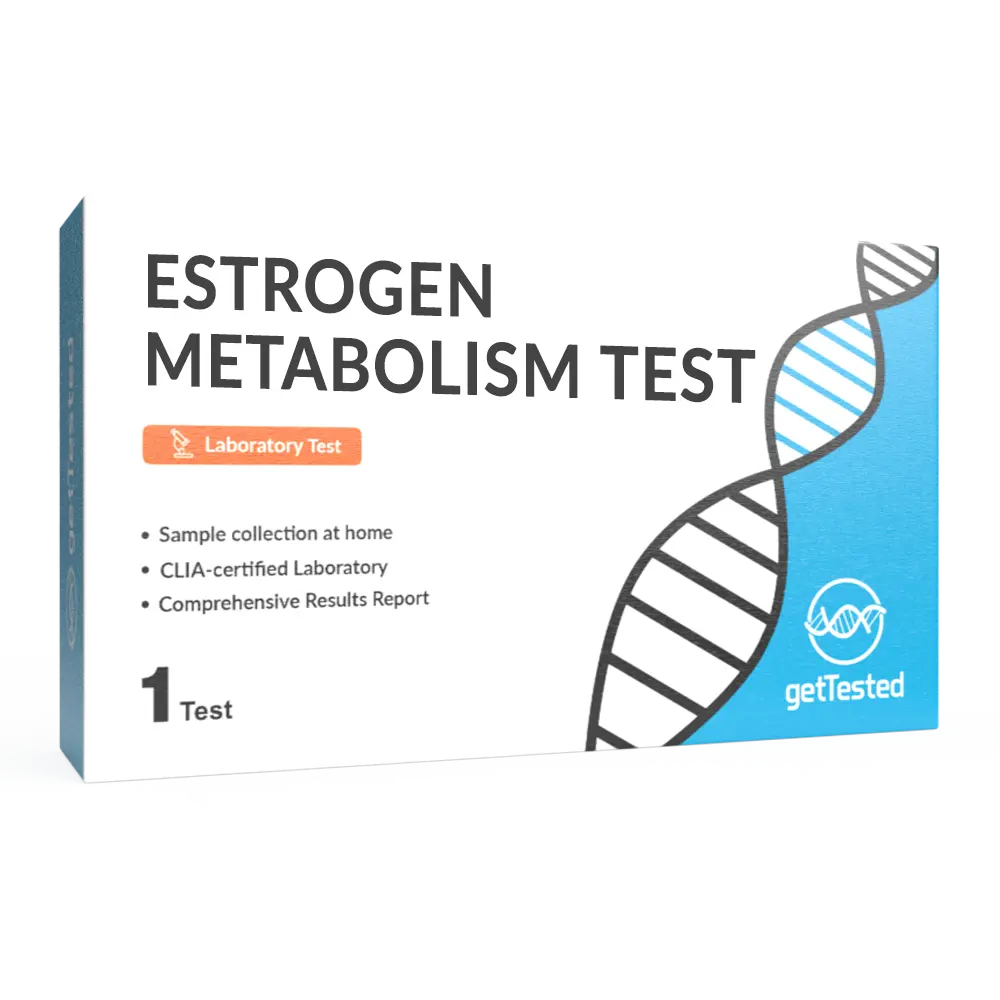
Estrogen Metabolism Test
GetTested’s Estrogen Metabolism Test provides a detailed assessment of how estrogen is processed in the body using a dried urine sample collected at home.
In addition to measuring the primary estrogens (E2, E1, and E3), the test evaluates how these hormones are metabolized through different pathways, including hydroxylation and methylation. These pathways influence how estrogen is broken down and cleared from the body.
The panel also includes markers such as BPA to reflect environmental exposure, as well as creatinine to support accurate interpretation of results.
Samples are analyzed in a CLIA-certified laboratory, with results delivered digitally.
$329.00
HSA & FSA eligible
About Estrogen Metabolism Test
What your estrogen metabolism can reveal
Estrogen is not only defined by how much is produced, but also by how it is metabolized and processed in the body.
After being produced, estrogen is converted into different metabolites through pathways such as 2-, 4-, and 16α-hydroxylation. These pathways influence how estrogen is broken down and cleared, and may reflect different patterns of hormone activity.
Methylation plays an additional role in how these metabolites are further processed, helping to regulate how estrogen is handled in the body.
By assessing these pathways alongside markers such as BPA and creatinine, the test provides a more complete view of estrogen metabolism.
This can help put hormone levels into context and may explain differences in hormonal balance and how hormone-related symptoms are experienced over time.
What This Test Measures
Primary estrogens
Hydroxylated estrogen metabolites
Methylated estrogen metabolites
Biomarkers
14 biomarkers
Sample
Urine
Results in
5-10 business days from receipt of sample at the lab.
Format
Lab Test
How It Works
You collect your sample at home using the instructions provided in the kit. The dried urine sample is then sent to a certified laboratory for analysis, and your results are delivered digitally once testing is complete.
Dried Urine Collection
The test uses a dried urine sample collected at home.
This method allows for convenient sampling without the need for blood collection and is commonly used to assess hormone metabolites. Once collected, the sample is dried and sent to the laboratory for analysis.
Have Questions?
Chat with our AI assistant for instant answers about this product, usage, or recommendations.
Over 500,000 Customers
4.8 out of 5 based on 5 reviews on this product
$329.00
Estrogen Metabolism Test
GetTested’s Estrogen Metabolism Test provides a detailed assessment of how estrogen is processed in the body using a dried urine sample collected at home.
In addition to measuring the primary estrogens (E2, E1, and E3), the test evaluates how these hormones are metabolized through different pathways, including hydroxylation and methylation. These pathways influence how estrogen is broken down and cleared from the body.
The panel also includes markers such as BPA to reflect environmental exposure, as well as creatinine to support accurate interpretation of results.
Samples are analyzed in a CLIA-certified laboratory, with results delivered digitally.
$329.00
HSA & FSA eligibleWhat your estrogen metabolism can reveal
Estrogen is not only defined by how much is produced, but also by how it is metabolized and processed in the body.
After being produced, estrogen is converted into different metabolites through pathways such as 2-, 4-, and 16α-hydroxylation. These pathways influence how estrogen is broken down and cleared, and may reflect different patterns of hormone activity.
Methylation plays an additional role in how these metabolites are further processed, helping to regulate how estrogen is handled in the body.
By assessing these pathways alongside markers such as BPA and creatinine, the test provides a more complete view of estrogen metabolism.
This can help put hormone levels into context and may explain differences in hormonal balance and how hormone-related symptoms are experienced over time.
What This Test Measures
Primary estrogens
Hydroxylated estrogen metabolites
Methylated estrogen metabolites
Biomarkers
14 biomarkers
Sample
Urine
Results in
5-10 business days from receipt of sample at the lab.
Format
Lab Test
How It Works
You collect your sample at home using the instructions provided in the kit. The dried urine sample is then sent to a certified laboratory for analysis, and your results are delivered digitally once testing is complete.
Dried Urine Collection
The test uses a dried urine sample collected at home.
This method allows for convenient sampling without the need for blood collection and is commonly used to assess hormone metabolites. Once collected, the sample is dried and sent to the laboratory for analysis.
What specifically does this estrogen metabolite test measure?
How does this dried urine hormone test help understand hormone balance?
Why is BPA included in this hormone health urine test?
Can men take this estrogen metabolism test?
This test may be relevant for men who want insight into hormone metabolism, particularly when exploring overall hormonal balance or how hormones are processed in the body.
Estrogen Metabolism Test price and what’s included
Price history
Current price
$329.00
Starting price
$329.00
Total change
$0.00
No. of changes
0
Stable Pricing
No hidden fees. The price you see is the price you pay.
Price Lock Guarantee
Your price won't change after purchase.
Have Questions About This Product?
Chat with our AI assistant for instant answers about this product, usage guidelines, or personalized recommendations.
Over 500,000 Customers
4.8 out of 5 based on 5 reviews on this product