STD Panel 7
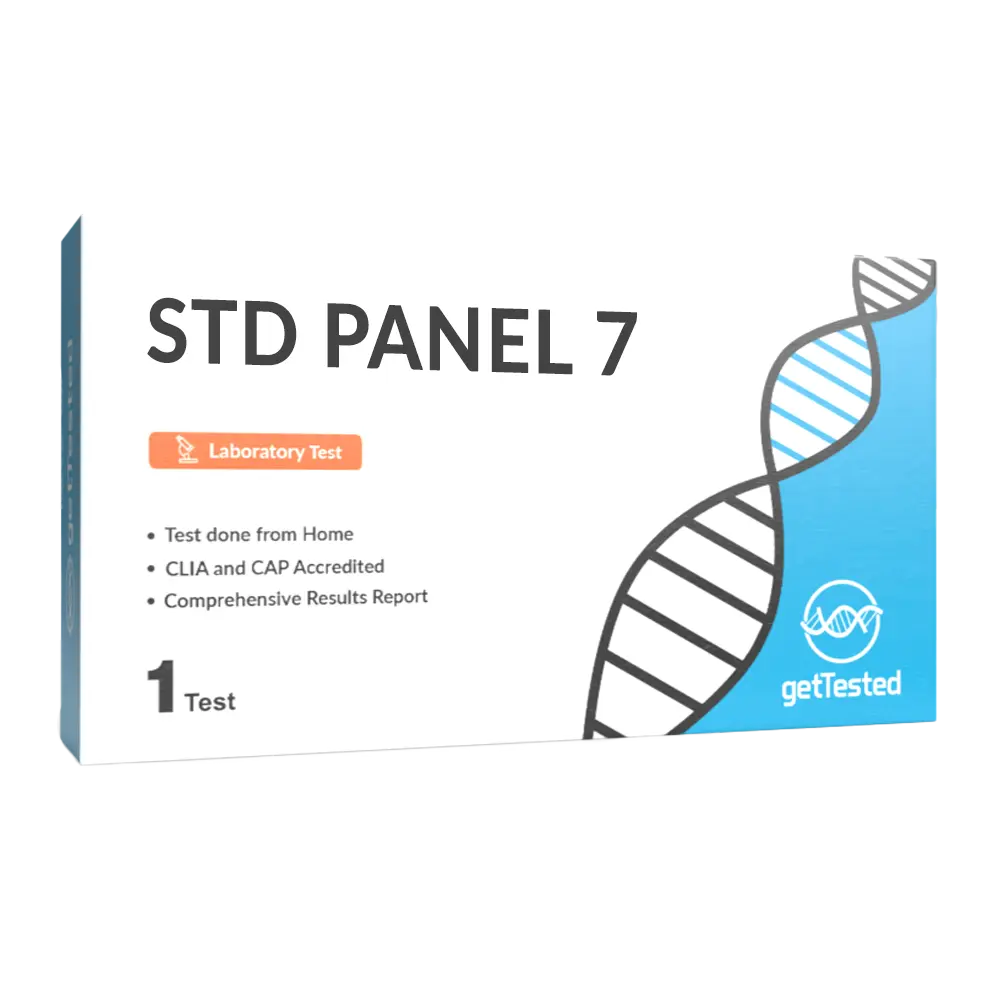
GetTested’s STD Panel 7 screens for seven sexually transmitted infections using a combination of urine and finger-prick blood samples collected at home.
The panel includes Chlamydia trachomatis (chlamydia), Neisseria gonorrhoeae (gonorrhea), Trichomonas vaginalis (trichomoniasis), Mycoplasma genitalium, as well as blood-based testing for syphilis, hepatitis B, and hepatitis C.
Samples are analyzed in CLIA-certified and CAP-accredited laboratories, with results delivered digitally.
$199.00
HSA & FSA eligible

About STD Panel 7
When broader STD screening may be relevant
Some sexually transmitted infections may not cause noticeable symptoms, while others may only become detectable after a certain period following exposure.
A broader screening panel may be relevant after potential exposure, when starting a new sexual relationship, or as part of routine sexual health testing. Including both common and blood-borne infections can provide additional context, particularly when symptoms are unclear or absent.
What This Test Measures
Biomarkers
7 biomarkers
Sample
Blood
Results in
5-7 days
Format
Lab Test
How It Works
You collect both a urine sample and a small blood sample at home using a finger-prick method. The samples are then sent to a CLIA-certified and CAP-accredited laboratory for analysis.
Your results are delivered digitally once testing is complete.
Sample Collection
This test combines two types of samples:
Urine sample – used to detect infections such as chlamydia, gonorrhea, trichomoniasis, and Mycoplasma genitalium
Finger-prick blood sample – used to screen for syphilis, hepatitis B, and hepatitis C
First-catch urine (the initial part of the urine stream) is typically recommended, as it contains the highest concentration of detectable material.
Have Questions?
Chat with our AI assistant for instant answers about this product, usage, or recommendations.
Over 500,000 Customers
4.6 out of 5 based on 5 reviews on this product
$199.00
STD Panel 7
GetTested’s STD Panel 7 screens for seven sexually transmitted infections using a combination of urine and finger-prick blood samples collected at home.
The panel includes Chlamydia trachomatis (chlamydia), Neisseria gonorrhoeae (gonorrhea), Trichomonas vaginalis (trichomoniasis), Mycoplasma genitalium, as well as blood-based testing for syphilis, hepatitis B, and hepatitis C.
Samples are analyzed in CLIA-certified and CAP-accredited laboratories, with results delivered digitally.
$199.00
HSA & FSA eligibleWhen broader STD screening may be relevant
Some sexually transmitted infections may not cause noticeable symptoms, while others may only become detectable after a certain period following exposure.
A broader screening panel may be relevant after potential exposure, when starting a new sexual relationship, or as part of routine sexual health testing. Including both common and blood-borne infections can provide additional context, particularly when symptoms are unclear or absent.
What This Test Measures
Biomarkers
7 biomarkers
Sample
Blood
Results in
5-7 days
Format
Lab Test
How It Works
You collect both a urine sample and a small blood sample at home using a finger-prick method. The samples are then sent to a CLIA-certified and CAP-accredited laboratory for analysis.
Your results are delivered digitally once testing is complete.
Sample Collection
This test combines two types of samples:
Urine sample – used to detect infections such as chlamydia, gonorrhea, trichomoniasis, and Mycoplasma genitalium
Finger-prick blood sample – used to screen for syphilis, hepatitis B, and hepatitis C
First-catch urine (the initial part of the urine stream) is typically recommended, as it contains the highest concentration of detectable material.
When is the best time to take this test after exposure?
To ensure high accuracy, it is important to wait until the 'window period' has passed. We recommend waiting at least 2 weeks after potential exposure for Chlamydia and Gonorrhea, and up to 6 weeks for Syphilis and Hepatitis. Testing too early may lead to a false-negative result.
How accurate are at-home STD tests compared to clinic tests?
Your samples are processed in CLIA-certified and CAP-accredited laboratories, the same facilities used by hospitals and clinics. The dual-sample method (urine and Dried Blood Spot) is a clinically validated approach for detecting these specific biomarkers at home.
Is the packaging and testing process discreet?
Every discreet STD test by mail is shipped in a plain, non-branded mailer. Your privacy is protected throughout the process, and your results are delivered via a secure digital portal that is not shared with your insurance company or any third parties without your consent.
STD Panel 7 price and what’s included
Price history
Current price
$199.00
Starting price
$199.00
Total change
$0.00
No. of changes
0
Stable Pricing
No hidden fees. The price you see is the price you pay.
Price Lock Guarantee
Your price won't change after purchase.
Have Questions About This Product?
Chat with our AI assistant for instant answers about this product, usage guidelines, or personalized recommendations.
Over 500,000 Customers
4.6 out of 5 based on 5 reviews on this product