
Creatinine and eGFR Explained: Kidney Function Blood Tests
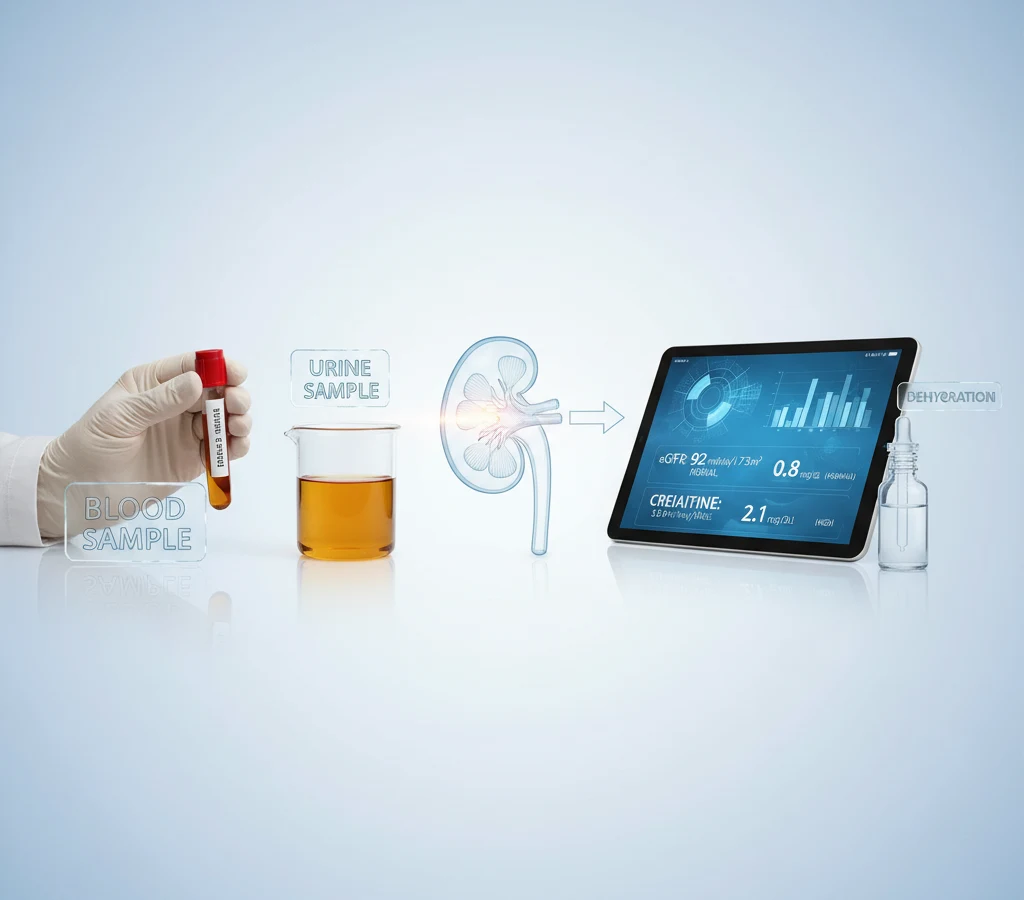
Creatinine and estimated glomerular filtration rate, or eGFR, help clinicians assess how well your kidneys filter your blood. They are closely connected: creatinine is measured in a blood sample, while eGFR is usually calculated using that result and personal characteristics such as age and sex.
Neither number tells the whole story. Your previous results, urine albumin, medicines, muscle mass, hydration and current health all affect interpretation. This guide explains what a kidney function test can show, what results to discuss with a healthcare provider, and when to seek medical advice.
What blood tests check kidney function?
Short answer: The main blood tests are creatinine with a calculated eGFR, often alongside urea or blood urea nitrogen, electrolytes and sometimes cystatin C. A urine albumin-to-creatinine ratio is also important because it checks for kidney changes that blood tests can miss.
- Evidence: Kidney guidelines recommend assessing both filtration, usually with eGFR, and urine albumin when evaluating people at risk of a long-term kidney health condition.
- Exceptions: Creatinine-based eGFR may be less reliable in people with unusual muscle mass or rapidly changing kidney function; additional testing may be needed.
- Sample type: Usually venous blood for creatinine, cystatin C and electrolytes; a separate urine sample for albumin-to-creatinine ratio.
- Medical source: NIDDK: Chronic kidney health condition tests and screening.
The main measurements provide different information:
- Creatinine: A waste product generated through normal muscle metabolism. The kidneys remove much of it from the blood.
- eGFR: An estimate of kidney filtration calculated from creatinine, cystatin C, or both. It is not a directly measured blood substance.
- Urea or blood urea nitrogen: Reflects a waste product of protein breakdown. It can rise with reduced kidney function, but also with dehydration, increased protein breakdown or gastrointestinal bleeding.
- Electrolytes and bicarbonate: Help assess consequences of impaired kidney function, including disturbances in potassium and acid–base balance.
- Cystatin C: An alternative filtration marker that is less influenced by muscle mass than creatinine.
A standard metabolic panel may contain several of these measurements, but not necessarily cystatin C or urine albumin. Check what was actually measured rather than assuming a panel name indicates a complete kidney assessment.
What does high creatinine mean?
Short answer: High creatinine can mean your kidneys are filtering less effectively, but it can also reflect dehydration, muscle mass, recent exercise, food intake or medicines. The change from your usual level often matters more than one isolated result.
- Evidence: Creatinine increases when its removal falls, but its production and handling also vary independently of kidney filtration.
- Exceptions: A muscular person may have a relatively high baseline, while someone with very little muscle can have impaired kidney function despite creatinine remaining within the laboratory range.
- Sample type: Usually venous blood; use the reference interval supplied by the testing laboratory.
- Medical source: MedlinePlus: Creatinine test.
Potential kidney-related causes include an acute kidney injury, a long-term kidney health condition or a blockage affecting urine drainage. A result cannot distinguish among these possibilities without clinical context provided by a doctor.
Non-kidney influences include a recent cooked-meat meal, strenuous exercise, large muscle mass and creatine supplementation. Some medicines, including trimethoprim, can raise creatinine by reducing its secretion into urine without a matching reduction in actual filtration. Other medicines can genuinely affect kidney blood flow or cause kidney injury.
There is no single creatinine cutoff that identifies a kidney health condition in everyone. Laboratories use different reference intervals, and age, sex, body composition and previous measurements matter. Creatinine may be reported in mg/dL or micromol/L; approximately 1 mg/dL equals 88.4 micromol/L.
A small-looking increase can be important if it happens quickly. For example, acute kidney injury criteria include a creatinine rise of at least 0.3 mg/dL within 48 hours. Clinicians assess the timing, baseline, urine output and overall health state rather than relying only on the laboratory's high flag.
What does low eGFR mean?
Short answer: A low eGFR suggests reduced kidney filtration, but one low result does not establish a long-term kidney health condition. In adults, an eGFR below 60 mL/min/1.73 m² persisting for at least three months generally meets a criterion for a long-term kidney health condition.
- Evidence: KDIGO defines a long-term kidney health condition by abnormalities of kidney structure or function present for at least three months, including persistently reduced GFR or markers of kidney damage.
- Exceptions: Acute health conditions, dehydration and rapidly changing creatinine can produce a low calculated eGFR that does not represent stable chronic kidney function.
- Sample type: Blood for creatinine and, when appropriate, cystatin C; urine testing adds information about kidney damage.
- Medical source: KDIGO 2024 Clinical Practice Guideline for Chronic Kidney Health Condition.
eGFR is usually reported in mL/min/1.73 m². The 1.73 m² represents a standard body surface area, allowing comparison across people. An eGFR of 60 does not mean that the kidneys are functioning at exactly 60%.
Clinicians interpret low eGFR alongside urine albumin, blood pressure, diabetes, symptoms and previous results. A stable result over several years means something different from a sudden decline over days or weeks.
The three-month requirement establishes chronicity; it is not a reason to delay assessment. A new or substantial reduction may need prompt repeat blood tests, medicine review, urine testing or imaging. If there is a sudden change, clinicians assess for acute kidney injury immediately.
What is a normal eGFR?
Short answer: An eGFR of 90 or above is generally considered normal or high in adults, although expected values decline with age. An eGFR of 60–89 does not, by itself, establish a long-term kidney health condition.
- Evidence: KDIGO classifies eGFR into six categories and combines them with urine albumin levels to assess kidney-related risk.
- Exceptions: A kidney health condition can exist with an eGFR above 90 if there are other persistent abnormalities, such as albumin in the urine or structural kidney changes.
- Sample type: Blood-based calculation; urine albumin requires a separate urine sample.
- Medical source: KDIGO 2024: GFR categories and CKD classification.
The adult eGFR categories, in mL/min/1.73 m², are:
- G1: 90 or above: Normal or high.
- G2: 60–89: Mildly decreased; not CKD without another marker of kidney damage.
- G3a: 45–59: Mildly to moderately decreased.
- G3b: 30–44: Moderately to severely decreased.
- G4: 15–29: Severely decreased.
- G5: Below 15: Kidney failure range, requiring specialist assessment.
These categories describe a result; assigning a chronic health condition stage requires evidence that the abnormality is persistent. Dialysis decisions are not based on eGFR alone.
An eGFR of 75 with normal urine albumin and no other kidney abnormalities does not automatically mean stage 2 CKD. Conversely, an eGFR of 95 with persistent substantial urine albumin can indicate a kidney health condition.
Some laboratories report higher results as “greater than 90” rather than an exact value. Estimates are less precise at higher filtration levels, so minor differences between otherwise reassuring results may not represent a meaningful change.
Can dehydration cause high creatinine?
Short answer: Yes. Dehydration can reduce blood flow to the kidneys, raising creatinine and lowering calculated eGFR; severe dehydration can result in acute kidney injury.
- Evidence: Reduced circulating fluid volume from vomiting, diarrhea, fever or inadequate intake is a recognized cause of acute kidney injury.
- Exceptions: Not every high creatinine result is caused by dehydration, and people with heart failure or prescribed fluid restrictions should not increase fluids without advice.
- Sample type: Blood for creatinine and electrolytes; urine output and clinical examination also help assess the situation.
- Medical source: NHS: Acute kidney injury.
A temporary rise may improve when the cause of dehydration is corrected. However, improvement is not certain, and dehydration can occur alongside another kidney problem. Persistent abnormalities need investigation.
Maintain your usual adequate fluid intake before routine testing unless you have different medical instructions. Do not deliberately drink excessive water to try to improve a result: it does not show whether the kidneys are healthy and can be unsafe.
Seek prompt advice if vomiting or diarrhea stops you from keeping fluids down, particularly if you are passing much less urine, feel faint or take medicines that affect kidney function. Ask a clinician or pharmacist about medicine management during a health condition rather than stopping prescribed treatment yourself.
When are cystatin C and urine albumin tests useful?
Short answer: Cystatin C can help clarify filtration when creatinine is difficult to interpret. Urine albumin testing checks for kidney changes and is useful even when eGFR appears normal.
- Evidence: A combined creatinine–cystatin C equation generally estimates filtration more accurately than either marker alone, while urine albumin adds important risk information.
- Exceptions: Cystatin C can be influenced by factors such as corticosteroid use and thyroid dysfunction; urine albumin can rise temporarily during a health condition, fever or strenuous exercise.
- Sample type: Blood for cystatin C; a spot urine sample, preferably first-morning when practical, for urine albumin-to-creatinine ratio.
- Medical source: NIDDK: Glomerular filtration rate equations and KDIGO 2024.
Cystatin C may be particularly helpful for someone with low muscle mass, an amputation or unusually high muscle mass, or when a result is close to a threshold affecting a clinical decision. Current recommended adult equations do not require a race adjustment.
Urine albumin-to-creatinine ratio, abbreviated uACR, measures albumin relative to urine creatinine. That urine creatinine measurement helps account for how concentrated the urine is; it serves a different purpose from blood creatinine.
- A1: uACR below 30 mg/g or below 3 mg/mmol, normal to mildly increased.
- A2: uACR 30–300 mg/g or 3–30 mg/mmol, moderately increased.
- A3: uACR above 300 mg/g or above 30 mg/mmol, severely increased.
Use the units shown on your laboratory report when comparing your result with these categories.
An elevated uACR usually needs confirmation. Menstrual contamination, a health condition of the urinary tract and recent heavy exercise can affect results. Do not assume a blood-only kidney panel includes this separate urine assessment.
How should you prepare for a kidney function test?
Short answer: Follow the laboratory's instructions, stay normally hydrated and disclose medicines and supplements. Creatinine alone often does not require fasting, but other tests collected at the same time may.
- Evidence: Meat intake, vigorous exercise and certain medicines or supplements can affect creatinine interpretation.
- Exceptions: People with fluid restrictions or other preparation instructions should follow their individualized medical advice.
- Sample type: Routine clinical testing usually uses venous blood. For a home test, follow the exact sample collection method specified by the provider.
- Medical source: MedlinePlus: Preparing for a creatinine test.
Tell the clinician about recent health conditions, dehydration, heavy exercise, unusual meat intake and creatine use. The laboratory may advise avoiding meat for a specified period. Do not stop prescribed medicines unless instructed.
Home collection results should be reviewed by a healthcare provider. Avoid assuming that a kit uses finger-prick blood, dried blood spots or venous blood based on its name: verify the actual collection requirements and whether eGFR is included in the report. For HSA/FSA eligibility, you should check with your plan administrator.
What should you do after an abnormal kidney result?
Short answer: Contact a healthcare professional to review the result against your previous measurements and arrange appropriate follow-up. Seek urgent care if you are very unwell, passing very little urine, severely short of breath or confused.
- Evidence: Guidelines recommend confirming unexpected abnormalities while promptly assessing possible acute kidney injury.
- Exceptions: A critical laboratory alert, rapid deterioration or severe symptoms should not wait for a routine appointment or another home test.
- Sample type: Follow-up may include clinical blood tests, urine testing and, when indicated, kidney imaging.
- Medical source: NHS: Acute kidney injury and KDIGO 2024.
Useful questions include: Is this different from my baseline? Could a health condition or a medicine explain the change? Do I need uACR or cystatin C? How soon should testing be repeated?
Kidney problems can cause few symptoms, so feeling well does not rule them out. Equally, a single borderline result is not a diagnosis from a doctor. The safest interpretation combines the trend, urine findings and your overall health rather than treating one number in isolation.
This article is for general information and is not a substitute for professional medical advice. Talk to a healthcare provider about your results.